
Vea también


 03.07.2026 06:15 PM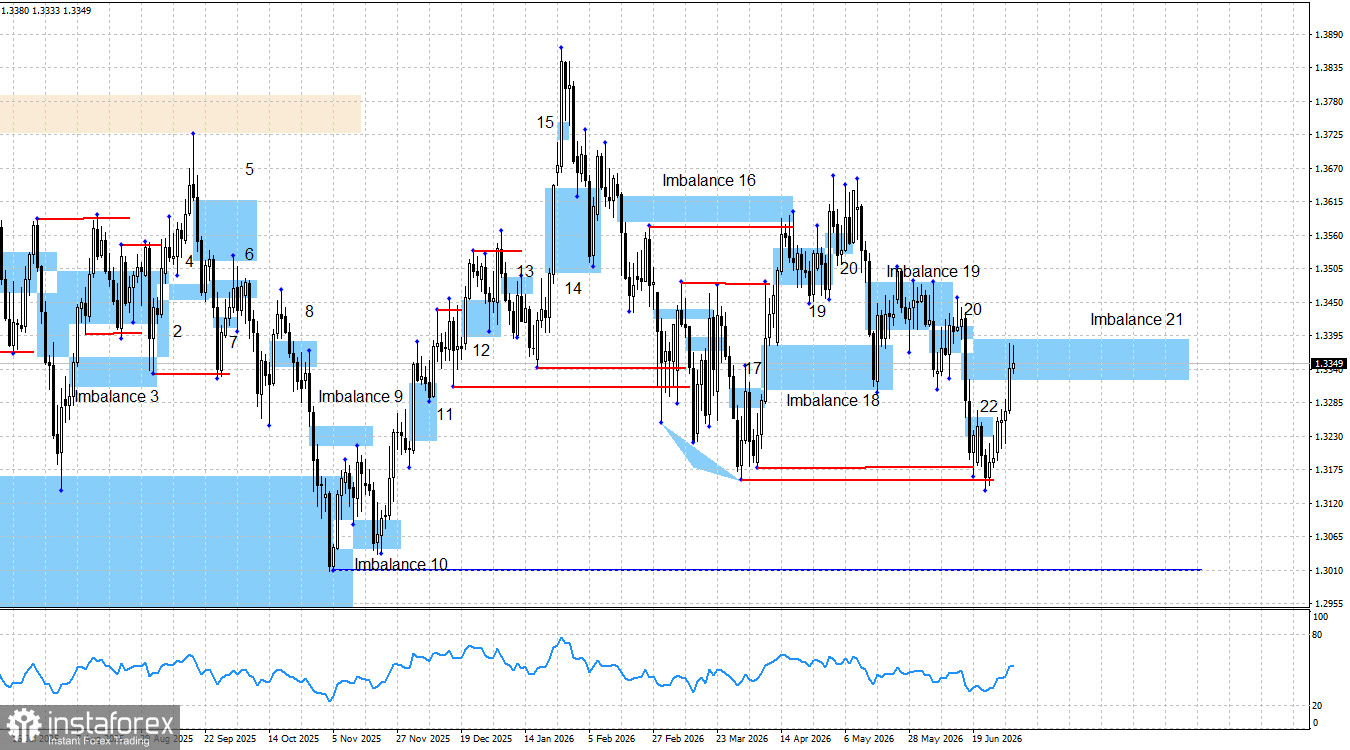
The GBP/USD pair has reversed in favor of the pound and begun a fairly strong rally that could mark the start of a broader bullish trend. In my view, the latest appreciation of the US dollar was not fully justified by the news flow over the past few weeks. The geopolitical conflict in the Middle East has ended, yet it was the primary driver behind the dollar's strength in 2026. Therefore, it seems unusual to see the dollar rise first because of the war and then continue rising after the conflict ended.
The FOMC meeting and the Fed's hawkish stance certainly provided grounds for dollar buying, but the rally lasted for nearly two weeks. The FOMC has not yet begun tightening monetary policy, and if inflation continues to slow, it may not tighten at all. Kevin Warsh's speech did not provide a clear answer as to whether the Fed intends to raise rates in July or September. The FOMC Chair stated that inflation must be brought down but offered no indication of any imminent change in monetary policy. Yesterday's US labor market data were weak enough to encourage the bulls to step up their buying, while the market began questioning the likelihood of Fed tightening in the near future. As a result, bearish imbalance 21 has been fully worked off, and the key question now is whether this bullish advance will end here.
In both the euro and the pound, the bears have not completely surrendered control. They have merely retreated somewhat. Invalidation of bearish imbalance 21 would signal a break in the local bearish market structure.
Chart analysis pointed to potential growth toward the 1.3322 level, which is exactly what occurred. The reaction to bearish imbalance 22 was weak, while the price first swept liquidity below the April 6 low and then below the March 31 low. Therefore, there were valid reasons to expect further gains in the pound. Admittedly, without the Nonfarm Payrolls report, that move might not have materialized.
Given that the dollar still lacks convincing reasons for a sustained long-term uptrend, despite its impressive gains in 2026, I believe the bears may no longer be able to maintain their offensive. However, chart analysis should always guide trading decisions, as it reflects actual market behavior. If no bullish patterns or signals emerge, there is no reason to open long positions. In that case, traders should wait for the market's reaction to imbalance 21. By the end of the current week, a new bullish imbalance will form, providing additional support for the pound.
At the moment, the market remains cautious regarding the agreement between Iran and the United States. Nevertheless, it can now at least be said that the active phase of the conflict has officially ended. The Fed triggered a strong rally in the US dollar, but I still do not see what could allow the bears to continue pressing their advantage. Can they really rely solely on expectations of future FOMC monetary tightening?
There were no significant economic releases on Friday. The UK economic calendar was empty, while the United States observed a holiday ahead of Independence Day.
Overall, the fundamental backdrop still suggests that, over the long term, the US dollar is more likely to weaken than strengthen. Neither the conflict between Iran and the United States nor the prospect of a Fed rate hike in 2026 has fundamentally changed that outlook. Geopolitical tensions temporarily reminded investors of the dollar's safe-haven status, but the conflict has ended—or is at least in its final stage. The Fed plans to raise interest rates in 2026, which is positive for the dollar. However, tighter monetary policy also slows economic growth and weakens the labor market. Moreover, Kevin Warsh was appointed FOMC Chair by Donald Trump specifically to pursue a more accommodative monetary policy—something Jerome Powell was unwilling to do. I do not believe that Fed tightening will evolve into a full tightening cycle or become a long-term policy trend. Therefore, in my opinion, any further gains in the dollar are likely to be temporary and short-lived.
The economic calendar for July 6 contains just one notable release. Therefore, the fundamental backdrop is expected to influence market sentiment mainly during the second half of Monday's trading session.
The long-term outlook for the pound remains bullish, while the reaction to bearish imbalance 22 resulted in only a weak bearish push. Therefore, the bulls still have an opportunity to regain control. The British pound could resume its decline toward the bullish trend invalidation level at 1.3007, but that would require fresh bearish signals. A sell signal can only emerge within bearish imbalance 21.
The bulls are supported by two liquidity sweeps, and today's candle close will form a bullish imbalance. This bullish pattern should allow buyers to resume their advance with greater confidence. In that scenario, the next upward targets for the pound are the highs of May 1 and January 27 at 1.3656 and 1.3867, respectively.


