
यह भी देखें


 21.01.2026 07:26 AM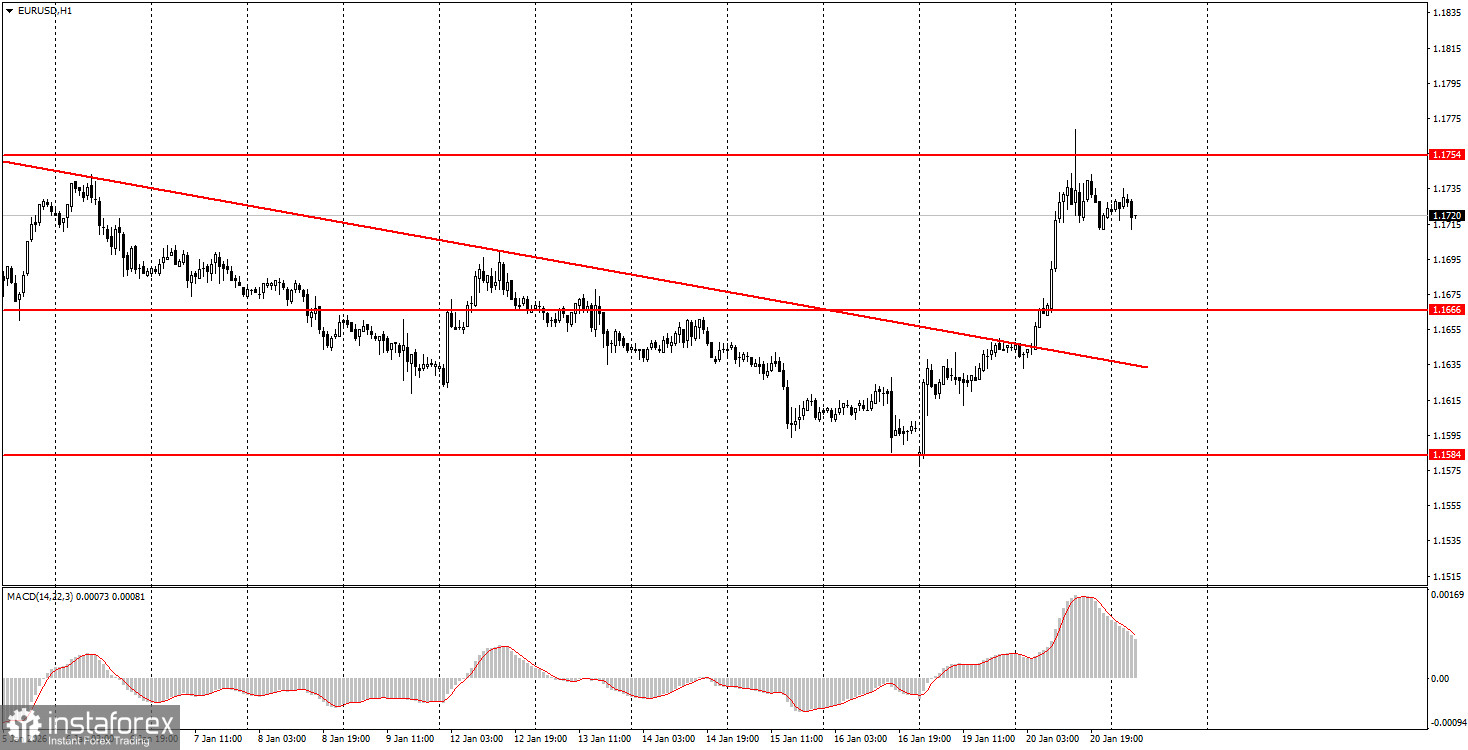
There are again very few macroeconomic releases scheduled for Wednesday, and yesterday's reports again had a fairly muted impact on currency movements. The market continues to monitor developments around the island of Greenland. Given Trump's ambitions in the Arctic and the near absence of troops across the island's vast territory, Europe fears a forcible takeover. Trump has already shown at the start of the year that military intervention is one of the tools he may use to achieve his goals. However, the president gave the EU time to "come to its senses" and voluntarily sell the island. From February 1, tariffs on a number of European countries, including the UK, will increase by an additional 10%, and from June 1, by 25%. Thus, the US is unlikely to attack the island in the coming months.
Among macro reports on Wednesday, only the UK business-activity index stands out; it may influence the Bank of England's decision at the next meeting. Therefore, the market could react noticeably to this release
One fundamental event is scheduled for Wednesday — a speech by ECB President Christine Lagarde. Ms Lagarde may comment on the new US tariffs against EU countries, but her remarks are most likely not likely to focus on trade disputes. Inflation in the euro area slowed to 1.9% y/y; further deceleration could prompt the European regulator to consider rate cuts.
Recall that the dollar can still be considered a safe currency for investors, but that status is weakening year by year. The process of global de-dollarization continues, albeit slowly. Trump's geopolitical aims do not bring calm for market participants. The "clouds" over Greenland are still gathering. Trump calls Greenland a "US national security issue," so he insists the island should become part of America as a new state. In our view, the fundamental backdrop has not supported the dollar before, and even less so now.
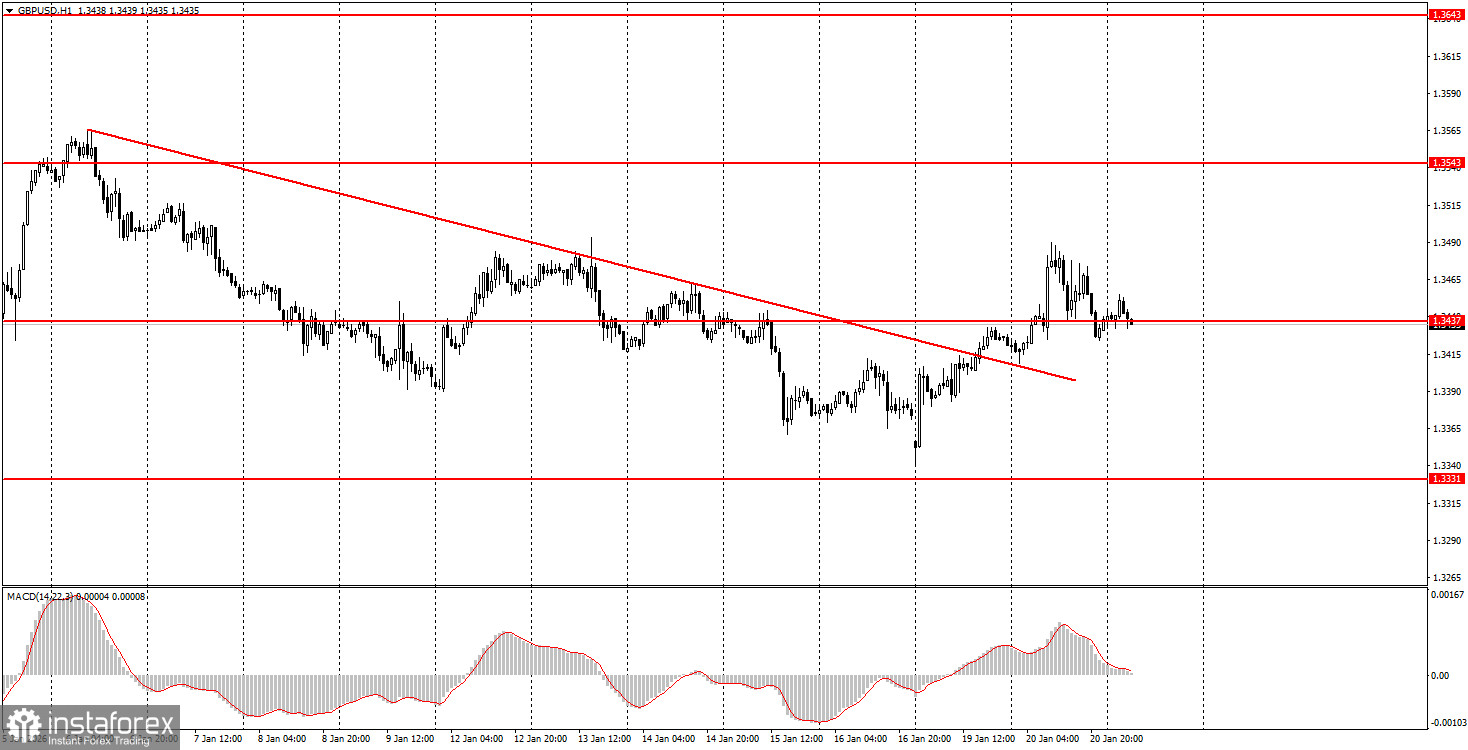
On the third trading day of the week, both currency pairs may continue to move higher, as the downtrends for the euro and the pound were broken yesterday. The euro can be traded today in the 1.1745–1.1754 range, and the pound sterling in the 1.3437–1.3446 range.
Support and resistance price levels — levels that serve as targets when opening buys or sells. Take Profit can be placed near them.
Red lines — channels or trendlines that reflect the current tendency and show which direction is preferable to trade now.
MACD indicator (14,22,3) — histogram and signal line — an auxiliary indicator that can also be used as a source of signals.
Important speeches and reports (always listed in the news calendar) can strongly affect a currency pair's movement. Therefore, during their release, trading should be done with maximum caution, or positions should be closed, to avoid a sharp price reversal against the preceding move.
Beginner forex traders should remember that not every trade can be profitable. Developing a clear strategy and effective money management are the keys to long-term trading success.

