
Vea también


 30.04.2026 06:29 AM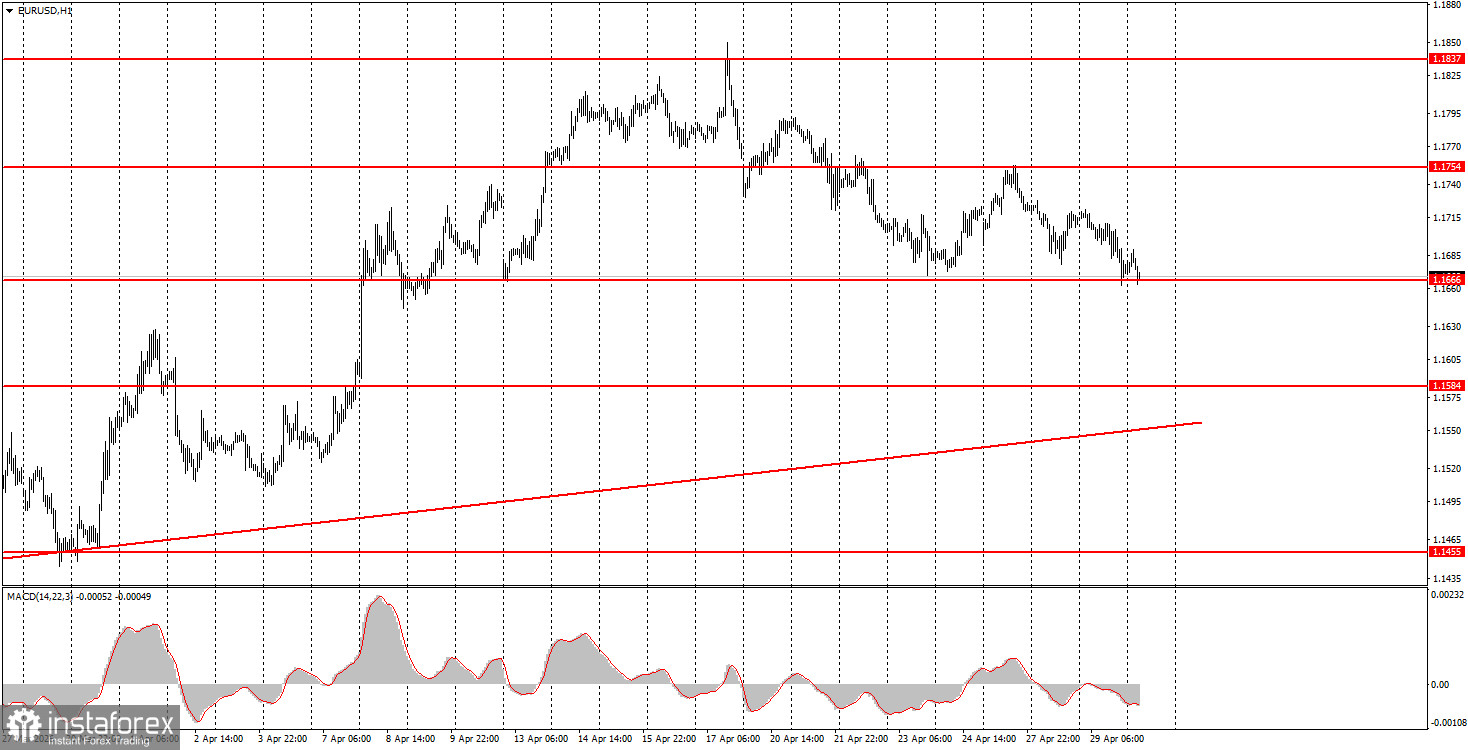
The EUR/USD currency pair traded with minimal volatility on Wednesday, as if no significant events were occurring. Even when excluding all macroeconomic data (including important reports on inflation in Germany and durable goods orders in the U.S.), the focus remained on the FOMC meeting and Jerome Powell's speech. Yes, the U.S. central bank kept interest rates unchanged, but also indicated that a loosening of monetary policy might be possible in the coming months (!!!). This information could have sent the dollar into a tailspin if the market had been paying any attention to fundamentals and macroeconomics. However, the market also ignored the FOMC meeting. Jerome Powell stated that he remains on the Monetary Committee, and the central bank is still adopting a wait-and-see position due to geopolitical uncertainty in the Middle East and rising energy prices. Thus, the upward trend on the daily timeframe remains intact, while the pair continues to correct.
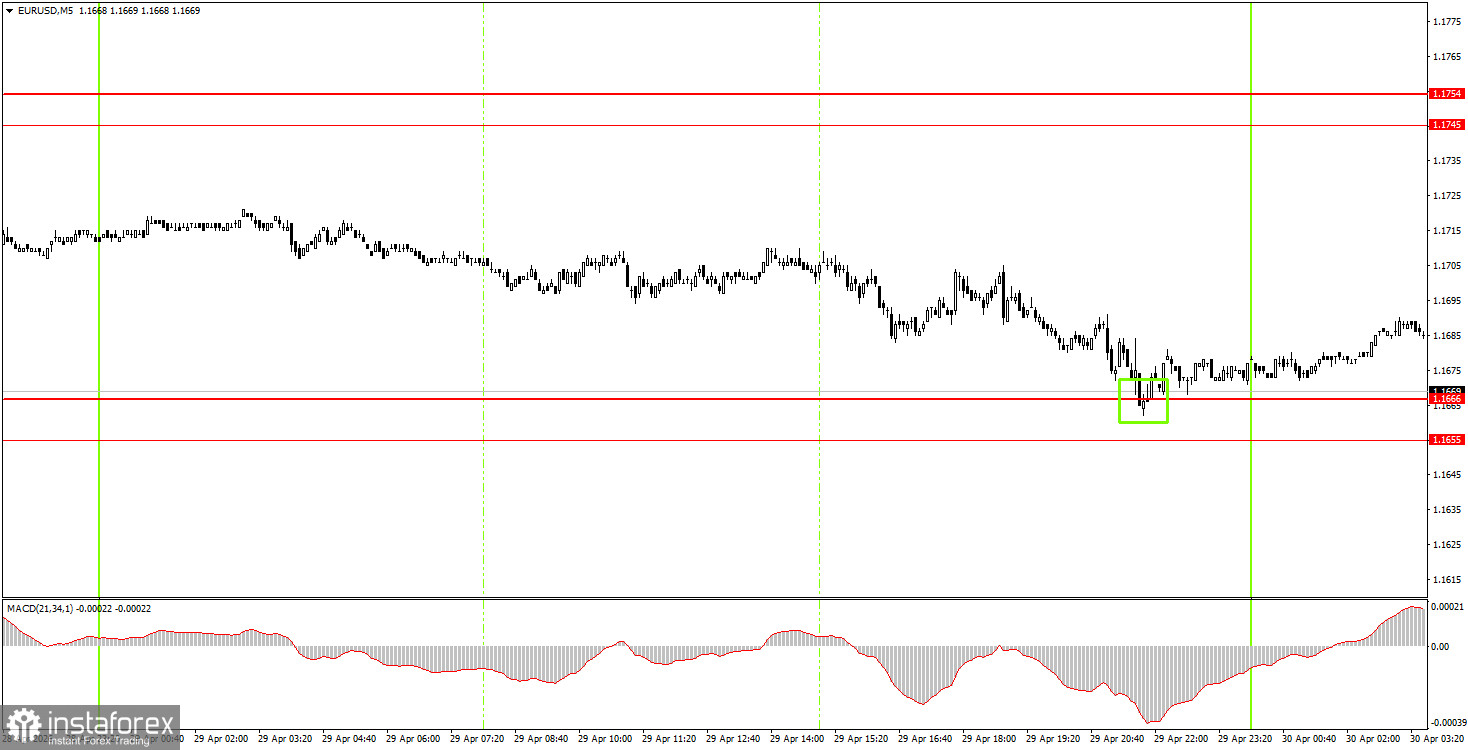
On the 5-minute timeframe on Wednesday, no trading signals were formed, aside from the rebound from the area of 1.1655-1.1666 after the FOMC meeting. Thus, the last signal (to sell) was generated on Tuesday in the form of a rebound from the area of 1.1745-1.1754. Considering the current volatility, beginner traders could have kept their short positions open for two full days.
On the hourly timeframe, the upward trend remains intact. For two consecutive weeks, the market has been selling off the dollar while geopolitical factors have taken a back seat. However, the geopolitical situation is not improving; the U.S. dollar may soon be in demand as a safe-haven asset. Yet, expecting a significant strengthening of the dollar now might be unrealistic. At most, we are seeing a correction that has been ongoing for two weeks.
On Thursday, beginner traders may open short positions targeting 1.1584-1.1591 if the price consolidates below the 1.1655-1.1666 area. New buy trades can be considered if the price bounces from the 1.1655-1.1666 area, targeting 1.1745-1.1754.
On the 5-minute timeframe, the following levels should be observed: 1.1354-1.1363, 1.1413, 1.1455-1.1474, 1.1527-1.1531, 1.1584-1.1591, 1.1655-1.1666, 1.1745-1.1754, 1.1830-1.1837, 1.1899-1.1908. On Thursday, a significant amount of macroeconomic data will be published in the Eurozone, Germany, and the U.S., which the market may again ignore. As a bonus, there will be the European Central Bank meeting and Christine Lagarde's speech, but traders may not pay any attention to these events either. Wednesday clearly demonstrated the market's complete reluctance to trade at this time.
Price levels of support and resistance are levels that serve as targets when opening buys or sells. Take Profit levels can be placed around them.
Red lines represent channels or trend lines that show the current trend and indicate the direction in which it is preferable to trade now.
The MACD indicator (14,22,3) – the histogram and the signal line – is a supporting indicator that can also be used as a source of signals.
Important speeches and reports (always included in the news calendar) can significantly affect the movement of the currency pair. Therefore, during their release, trading should be done with utmost caution, or traders should exit the market to avoid sharp price reversals against the previous movement.
Beginning traders in the forex market should remember that not every trade can be profitable. Developing a clear strategy and effective money management are the keys to long-term trading success.


