
Veja também


 28.09.2026 12:01 PM
Immediately after the September rate hike, FOMC members went on the offensive. On Friday, September 25, three officials simultaneously sent hawkish signals.
Beth Hammack (Federal Reserve Bank of Cleveland) said the main risk today is the formation of "inflationary mindsets" among the public. "Inflation has been above target for more than five years. We must ensure policy remains restrictive to help inflation return to target." Jeffrey Schmid (Federal Reserve Bank of Kansas City) was even more direct: "We still have not solved the inflation problem. Inflation has been above target for more than five years." John Williams (Federal Reserve Bank of New York) stressed the danger of recurring supply shocks, which make it harder to bring prices back to 2%.
Earlier in the week, Michael Barr (a member of the Board of Governors) said he supports additional rate hikes because "the risks to achieving the inflation goal have risen while labor market risks have eased," and Anna Paulson (Federal Reserve Bank of Philadelphia) also indicated that further tightening may be required.
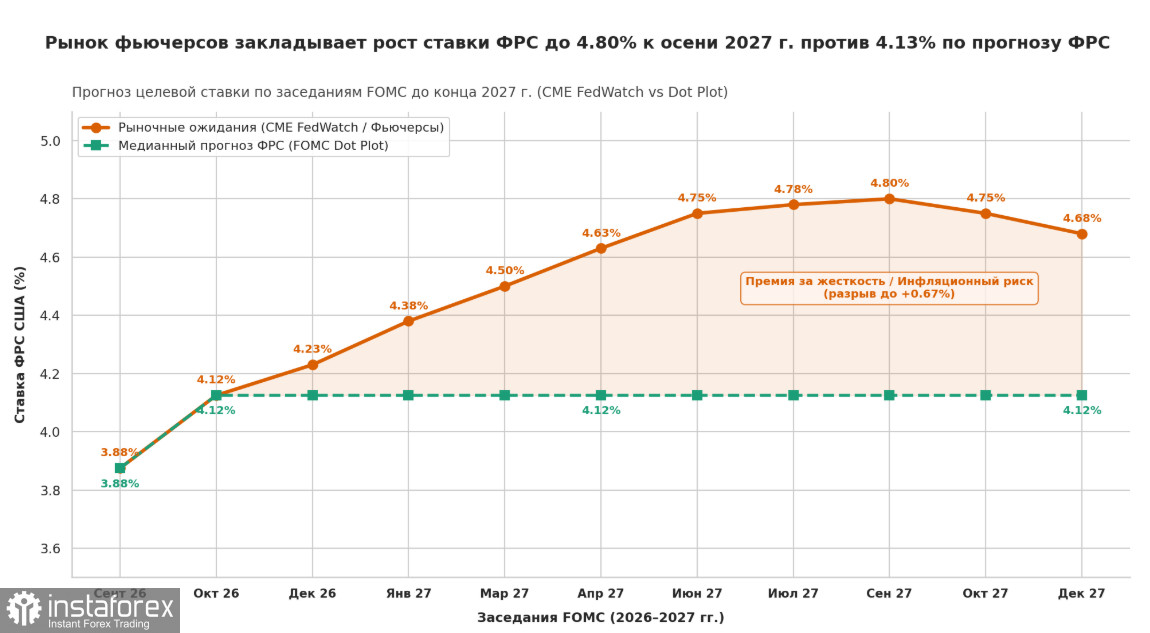
The rhetoric has mattered: according to CME data, as of September 28, the market now assigns a 64.8% probability to a rate hike at the October meeting (a 35.2% chance of a pause), and the chance of another hike in December has risen above 50%. Bank of America warns that investors should prepare for the possibility that the Fed funds rate could exceed 5%.
Durable-goods orders for August surprised to the upside. Core capital orders (excluding defense and aviation) rose 1.6% month-on-month versus July's 0.6% and a forecast of 0.5%. This is a key indicator of business investment, and signals sustained demand in the corporate sector.
The University of Michigan consumer sentiment index for September was revised up to 48.1 from a preliminary 47.8 but remains near historically weak levels (well below August's 51.7). Assessments of current and expected personal finances deteriorated by roughly 10% month-on-month. One-year inflation expectations rose to 4.6% — the highest since June — while five-year expectations reached 3.4%.
The CFTC report showed a sharp $12.5 billion increase in the aggregate dollar position — ending seven weeks of selling. The driver was rising Treasury yields and renewed expectations of Fed tightening.
We see a growing bullish impulse for the dollar supported by the Fed's hawkish rhetoric. Although the US economy's structural problems remain (US public debt already exceeds 122% of GDP, the budget deficit is about 5.9% of GDP, and higher yields will sharply increase the budgetary burden from interest payments), the dollar appears to have entered a phase of hawkish resurgence.


