
یہ بھی دیکھیں


 12.06.2026 04:32 AM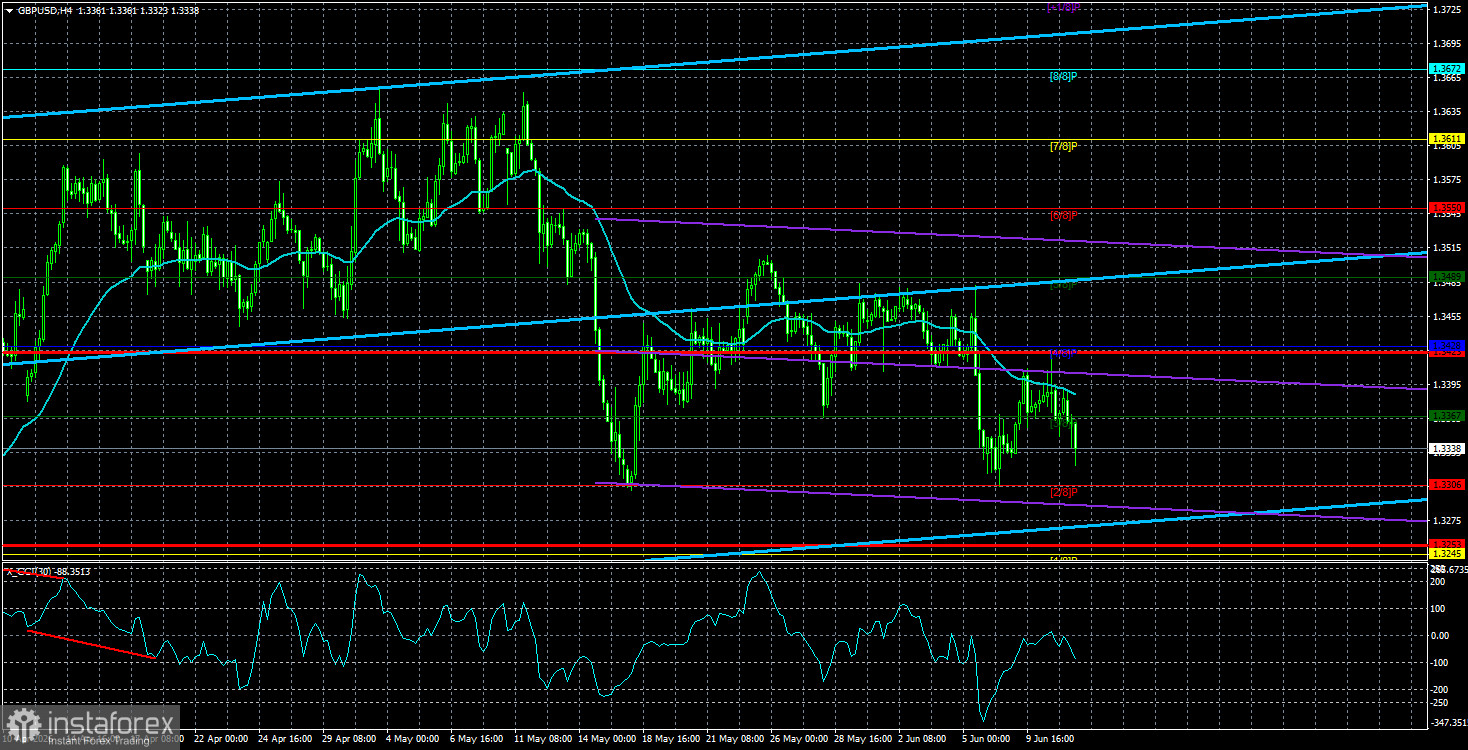
The GBP/USD currency pair traded calmly on Thursday, moving slowly and without much concern. Looking at the chart below, in the past 18 days, volatility exceeded 88 pips only once and surpassed 80 pips 3 times. 80 pips per day is certainly not insignificant, but over the previous 13 days, the GBP/USD pair traded more volatile than 88 pips on 11 occasions. Thus, the decline in market activity is evident. At the same time, the British pound has stopped declining. Recall that the key drop in recent weeks was not linked to geopolitics. It occurred between May 11 and 18, during which time the UK faced another political crisis, the consumer price index, contrary to forecasts and common sense, began to slow, and, in general opinion, the Bank of England abandoned its hawkish outlook. These three events led to the collapse of the British pound.
However, more than three weeks have passed since then, and the British pound has only collapsed once—when the US Nonfarm Payrolls report was published. For the rest of the time, the pound has either risen or remained stable. So why is the market not reacting to escalating news from the Middle East? Recall that this week, Iran distinguished itself by shooting down an American military helicopter. Donald Trump has issued bombing orders for Iran twice (which the US military successfully executed), and Iran has begun once again to bomb American military bases in the region. The geopolitical factor has a shelf life. In recent weeks, we have been consistently stating that the influence of geopolitics on the market is weakening. Traders are still closely monitoring the Iranian case, but are no longer prepared to respond to every new attack in the Middle East or every new promise from Trump to sign a deal with Iran.
The key points of this conflict remain:
Thus, all attacks in the Middle East, provocations, new threats, and promises from Trump have no impact on the key points listed above. We believe that only changes to one of these four points can prompt traders to act. All other news represents ordinary noise.
Shifting to the daily timeframe makes it clear that the GBP/USD pair has been trading in a range for nine months. While this may not be the most classic flat that traders have ever seen, the movement is sideways, and this is a fact. Therefore, no matter how much some may want it, the dollar cannot show a trend under these circumstances, even with a favorable fundamental and geopolitical backdrop. We still do not expect any significant strengthening of the American currency. The dollar's maximum right now is a correction.
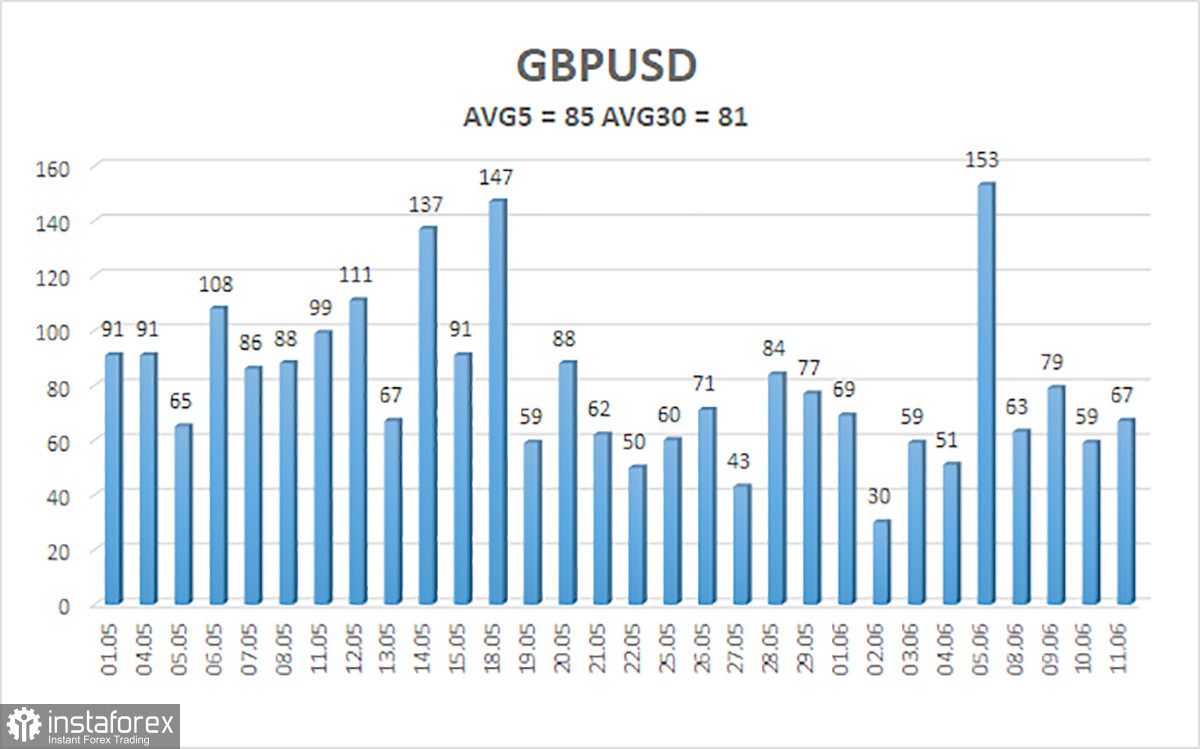
The average volatility of the GBP/USD pair over the last five trading days as of June 12 is 85 pips, which is considered "average." On Friday, June 12, we expect the pair to move within the range bounded by 1.3253 and 1.3423. The upper channel of the linear regression has turned upwards, indicating a potential recovery of the upward trend. The CCI indicator entered the overbought area, warning of a possible end to the downward trend.
The GBP/USD currency pair has resumed its downward movement. Trump's policies will continue to exert pressure on the US economy, so we do not expect growth in the US dollar in the long term. However, 2026 appears to be quite positive for the dollar due to geopolitical factors. Thus, long positions targeting 1.3489 and 1.3550 can be considered when the price is above the moving average. A price below the moving average will allow for trading bearish with targets at 1.3306 and 1.3253. Market conditions are frequently changing, and the market continues to primarily track geopolitical news, which is not uniform.


