
یہ بھی دیکھیں


 13.05.2026 07:33 PM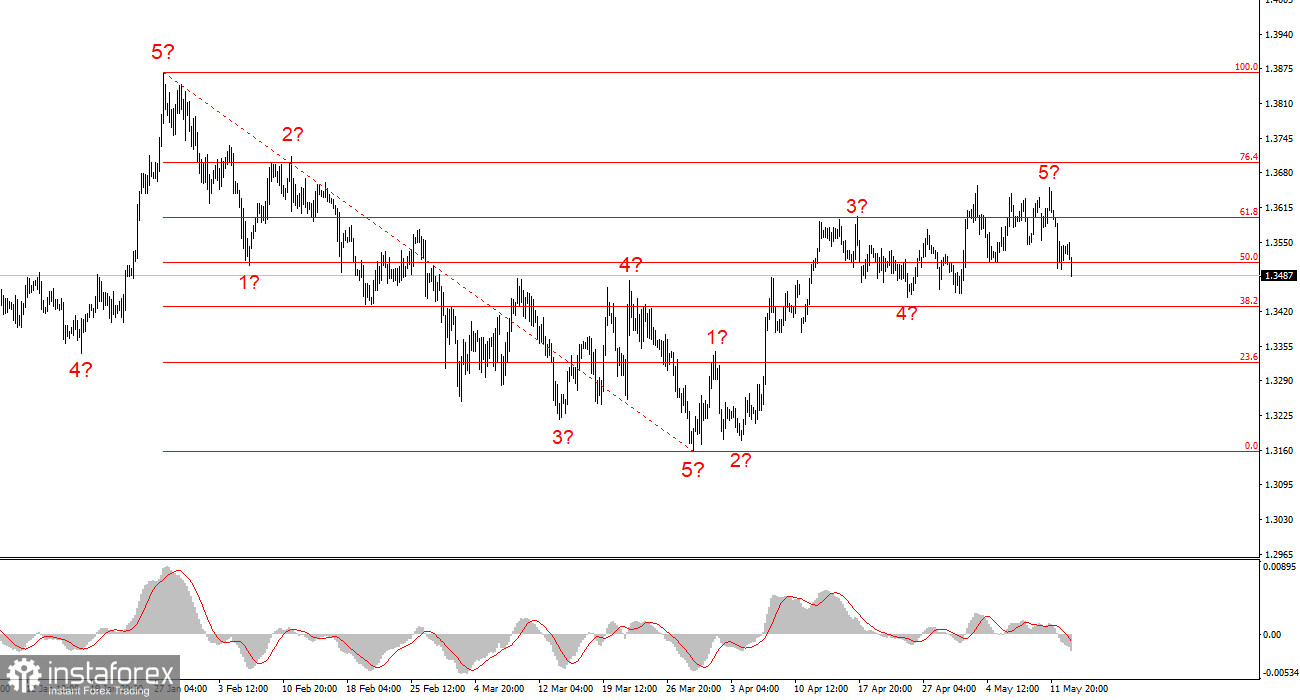
The wave pattern for GBP/USD continues to indicate the formation of an upward trend segment (lower image), while in the short term the market is still developing a structure that was initially interpreted as corrective, but is now viewed as impulsive. The rise of both the euro and the pound was supported by the truce in the Middle East, which has lasted for a month already (with rare exceptions) and has every chance of becoming the foundation for a full-fledged peace agreement. However, recently the rhetoric of the leaders of Iran and the United States has become more aggressive and uncompromising, which could eliminate any optimism regarding a peace deal.
The latest upward wave sequence has taken the form of a five-wave pattern, and its fifth wave may already be complete. If that is indeed the case, then we should expect a corrective structure consisting of at least three waves. Much will depend on developments in the Middle East. If no new escalation occurs and Tehran and Washington continue working toward a final truce, then after the correction the pair could begin forming a new upward trend segment.
The GBP/USD pair fell by 70 basis points on Tuesday and lost another 50 on Wednesday. Demand for the British pound continues to weaken, and there were plenty of reasons for this. Let me remind you that the week began with Donald Trump's statement that the truce with Iran was "on life support." Perhaps this was once again a veiled warning to Iran to be more accommodating in negotiations, but knowing Trump, it could mean almost anything. If the United States launches another strike on Iran tomorrow, I would not be surprised. The market dislikes unjustified risks, which is why demand for the U.S. dollar increased during the first three days of the week.
Additional pressure on the pound also came from a new political crisis in the United Kingdom. The Labor Party suffered a crushing defeat in local elections, losing more than a hundred seats in local governing bodies. Keir Starmer is being urged to resign due to his inability to implement radical reforms. The British leader has rejected such calls, and the situation has not yet escalated to a vote of no confidence. Nevertheless, this factor also weakened demand for the pound during the week.
In addition, the U.S. inflation report showed a significant acceleration in April, forcing markets to raise their hawkish expectations regarding Federal Reserve monetary policy. So far only slightly, but the conflict in the Middle East is not over, and the Strait of Hormuz remains blocked. Consequently, inflation may continue to accelerate, leaving the FOMC with little choice.
The wave structure also suggests the completion of a five-wave sequence, which supports further downside movement in the pair. Tomorrow morning, the United Kingdom will release GDP and industrial production data, which may create additional difficulties for the pound.
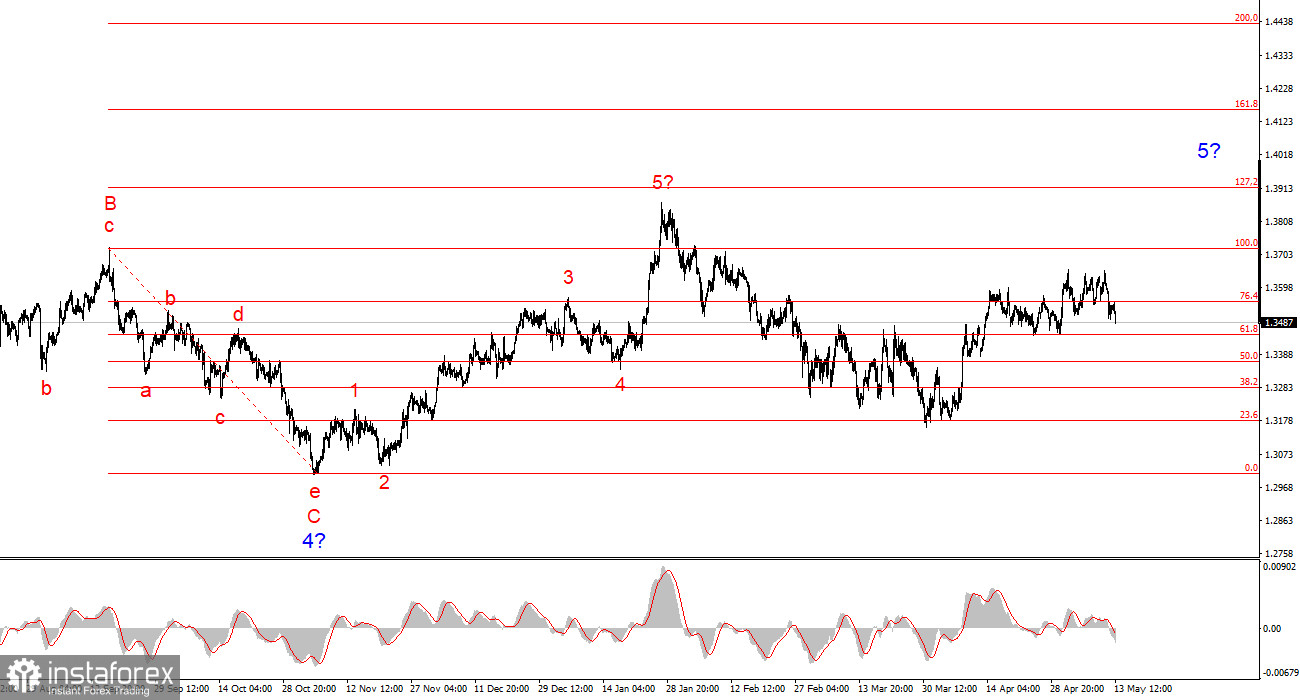
Over time, the wave pattern for GBP/USD has become clearer, just as I had expected. We can now see a distinct five-wave upward structure on the charts, which may already be complete. If this is indeed the case, then we should expect the formation of a corrective wave sequence targeting the area around the 1.34 level. If geopolitical developments continue moving toward a long-term peace settlement, then after the corrective wave sequence is complete, a new upward trend segment should begin to form. Thus, the combination of wave dynamics and geopolitics will determine the pound's fate in the coming weeks.
The higher timeframe wave structure looks nearly ideal, even though wave 4 moved beyond the peak of wave 1. However, I would remind you that perfect wave patterns exist only in textbooks. In practice, everything is much more complicated. Wave 4 has the classic three-wave appearance, meaning that after its completion, a new impulsive trend segment began to form.


