
Lihat juga


 10.09.2026 12:39 AM
While tankers burn in the Persian Gulf, traders in London and New York argue about something else: how many billions will the US Treasury spend on buybacks of Treasuries? Brent broke $100/bbl for the first time since July, Treasury yields sit near multi-year highs, and EUR/USD is rising as if nothing has happened — on expectations of Treasury buybacks and European Central Bank hawkish rhetoric. The question is simple: how long will this euro "bull party" last?
Oil is clear. Brent futures jumped more than 2% before giving back some gains. U.S. forces destroyed five Iranian oil tankers in response to an attempted ballistic-missile strike on a U.S. Navy ship. Chinese buying has added fuel to the fire — the world's largest importer is returning to the market.
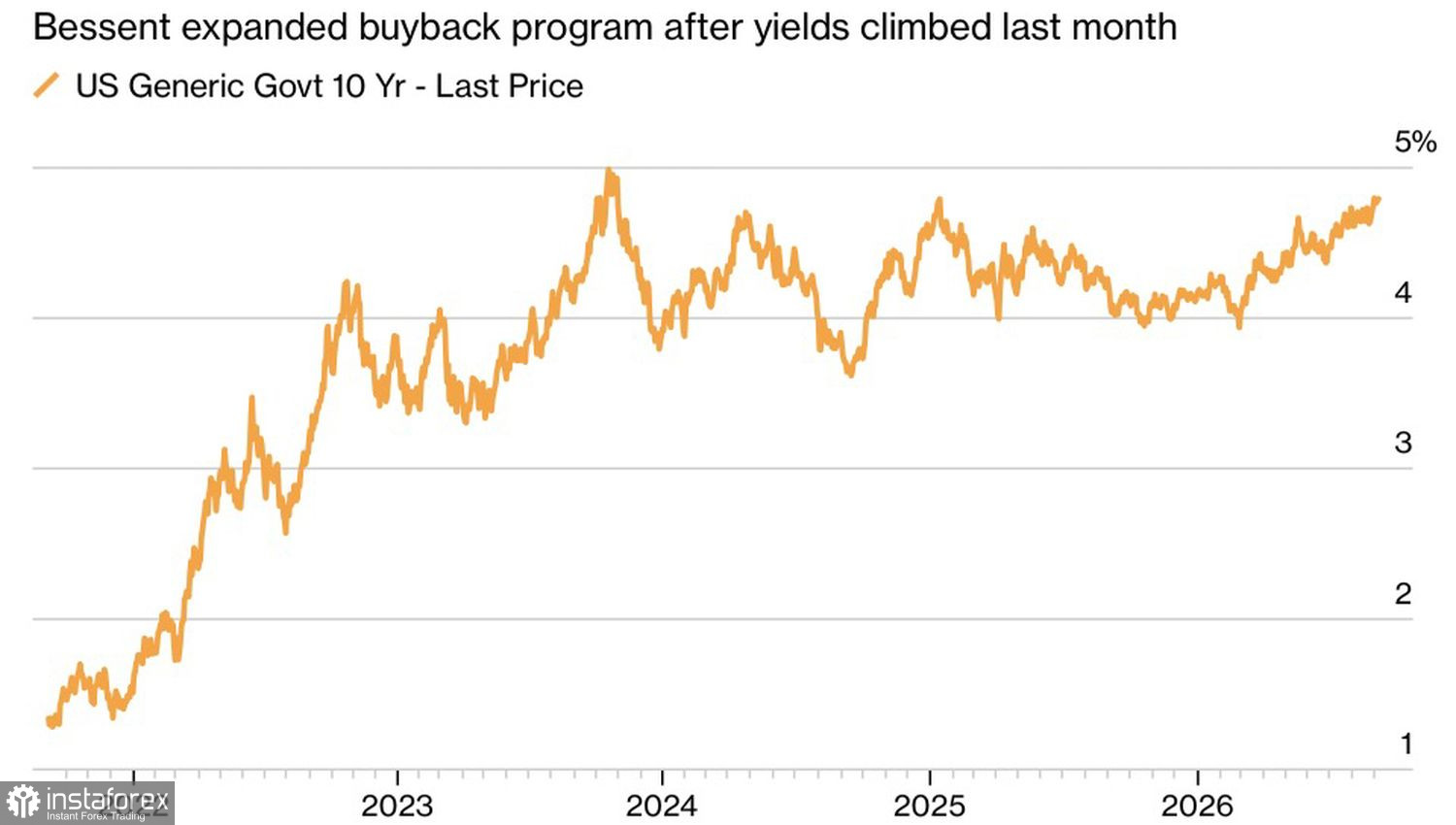
At the same time, Treasury yields are rising. Traders fear that higher oil prices will boost inflation and push the Federal Reserve to hike rates. Two-year yields climbed to levels not seen since January 2025, and ten-year yields hover near a three-year peak.
The ECB is almost certain to raise rates again on Thursday — a second hike since the war — to 2.5%, the upper bound of the neutral range. Eurozone inflation accelerated to 3.3% y/y in August, the highest in nearly three years. Second-round effects are not yet visible, but the longer energy prices remain elevated, the greater the risk that higher winter wages will follow.
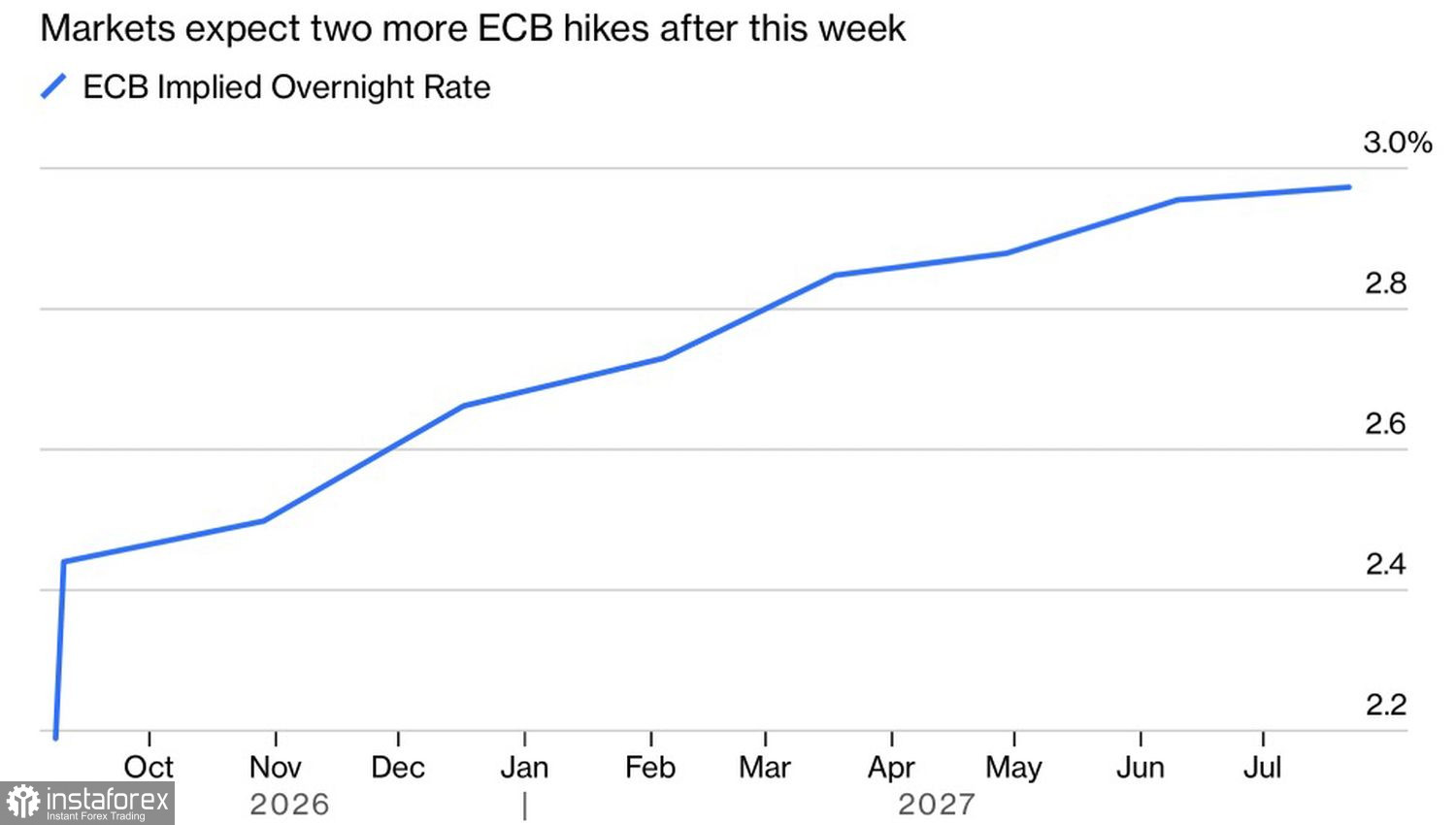
The regional economy is surprisingly resilient. The currency bloc was the only region to log a growth peak in Q2, which loosens the ECB's hands. However, the same expensive energy that might justify a third hike also risks undermining demand resilience.
Morgan Stanley views the September verdict as likely to be the last for some time. Further tightening would require clear signs of sustained GDP growth and entrenched inflation. The rally in eurozone government yields complicates the picture: anticipating a prolonged conflict, higher yields alone raise borrowing costs for businesses and households regardless of ECB action.
Meanwhile bond investors await Wednesday's announcement from the Treasury on the size of buybacks. After an August pledge to at least double purchases of long-term debt, RBC says $4bn would disappoint the market; the base case is $5–6bn, while Morgan Stanley cites $10bn as an upper bound. That figure would set a new benchmark for future operations and will reveal the Ministry of Finance's growing concern about profitability.
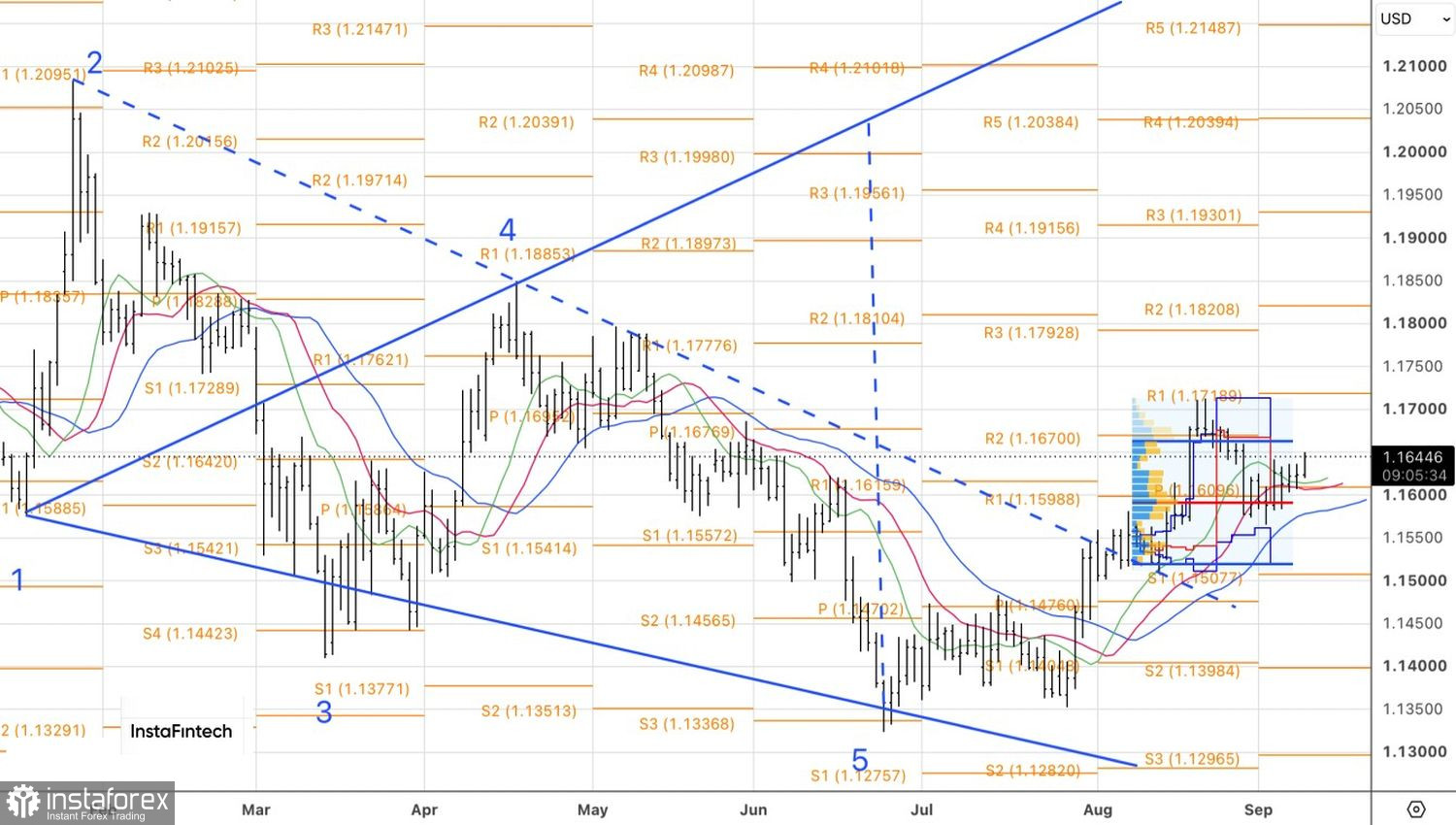
So EUR/USD's rally rests not on a fundamental improvement but on two numbers at once — the ECB decision and the Treasury's buyback announcement. If either fails to meet expectations, the euro's party may end faster than it began.
Technically, on the daily chart, a rejection at pivot resistance at 1.1665 or 1.1715, or a move below 1.164, would be reasons to sell.


