
यह भी देखें


 13.03.2026 02:20 PM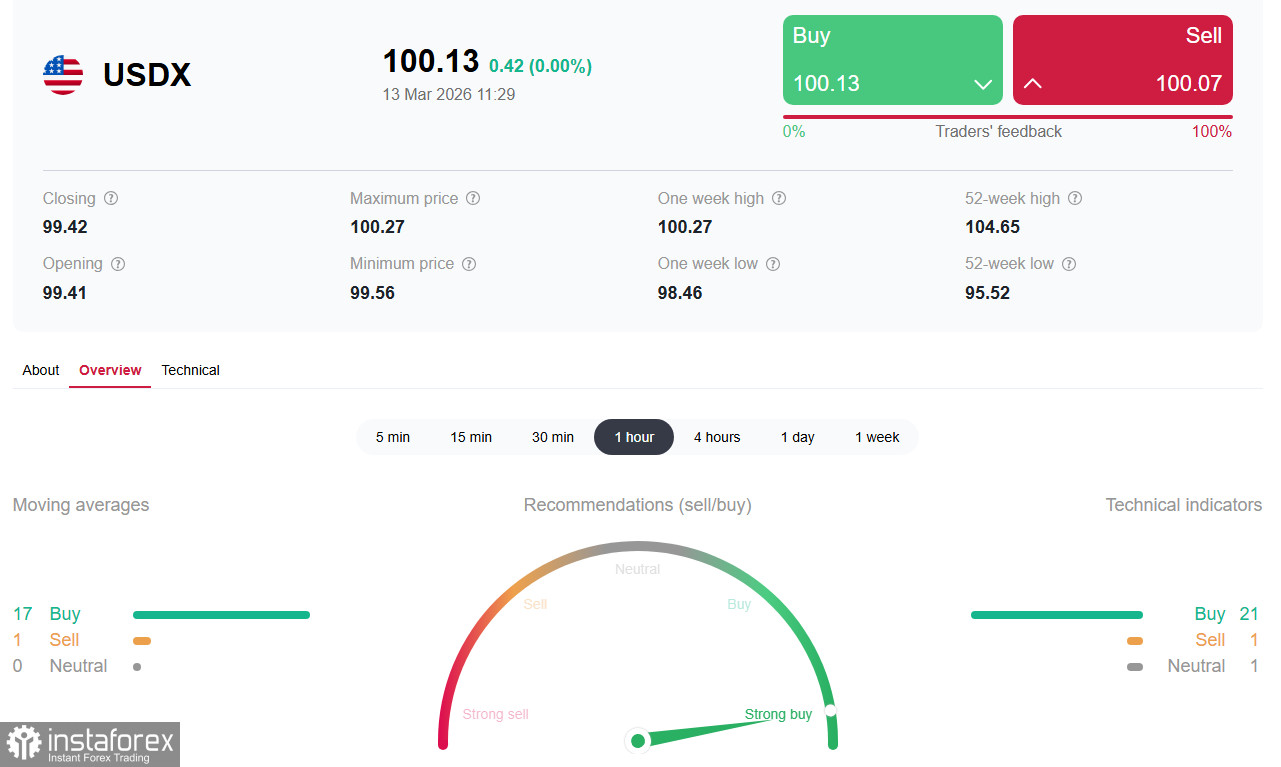
*see also: InstaTrade trading indicators for USDX
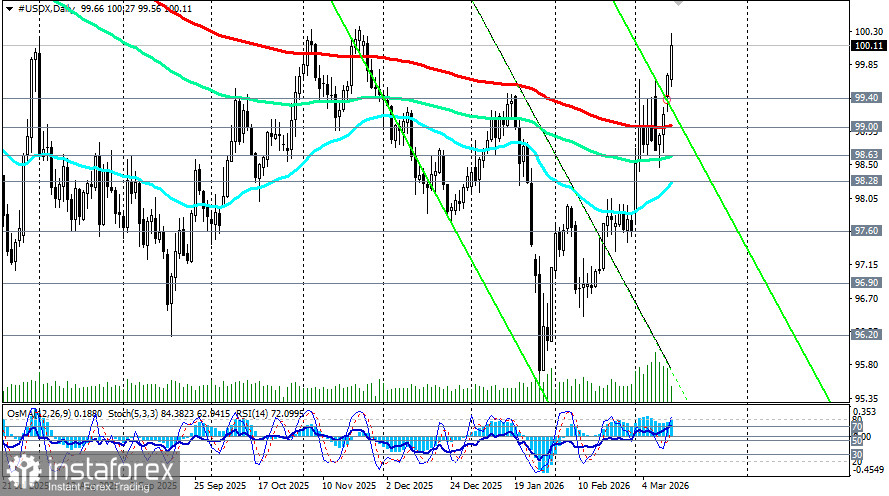
The US Dollar Index (USDX) is set to complete a fourth consecutive week of gains, trading at the time of publication and ahead of the US session above the psychological 100.00 mark, at its highest levels since November 2025.
The principal beneficiary of the situation has been the demand for the US dollar as the main safe-haven currency amid escalation in the Middle East and a radical repricing of expectations for Federal Reserve policy.
Current situation: geopolitics, oil shock, and hawkish Fed pivot
The key driver of the dollar's rally remains the ongoing military operation "Operation Epic Fury" and its aftermath. The US administration and the Pentagon, according to available reporting, underestimated Iran's readiness to respond forcefully, including an effective closure of the Strait of Hormuz. Iran's new supreme leader, Mojtaba Khamenei, has confirmed that the strait, through which roughly 20% of global oil supplies transit, must remain closed, and that attacks on Persian Gulf neighbors will continue.
This creates a unique situation in which a geopolitical shock not only temporarily increases demand for safe-haven assets but also sets a lasting trend of risk repricing. March opened with the Iran conflict as the single dominant variable across global markets, forcing traders to put fundamental macro data on the back burner.
Closure of the strait prompted an explosive — albeit corrective — rise in oil prices, which in turn is fundamentally changing inflation expectations. US gasoline prices have already jumped about 20% in the past 12 days, which economists say will boost inflation by at least 1.0% by month-end.
That leaves Fed officials little room to pursue a dovish stance at the March meeting, and markets have sharply pared back rate cut expectations. Where investors had priced in about 50 basis points of easing through year-end before the conflict, those expectations have now fallen to roughly 20 basis points. The probability that the Fed will pause in March is now priced by markets as virtually certain: the combination of a geopolitical shock and rising oil leaves the risk of stagflation elevated, creating an environment in which the dollar is the preferred safe-haven asset.
Fundamental backdrop: macro data recedes into background
Data released this week on the US economy confirmed its resilience but failed to overturn the dominant geopolitical trend.
Labor market. Initial jobless claims fell to 213,000, beating forecasts. Economists view this as a sign that February's sharp payroll decline (-92,000) was a temporary aberration and that the labor market remains stable, allowing the Fed to hold the policy rate in the 3.50%–3.75% range.
Inflation. The consumer price index (CPI) for February came in line with expectations at 2.4% year-on-year, with core CPI at 2.5%. However, these figures do not reflect the post-conflict surge in energy prices, so market reaction was muted.
Today's focus is on the PCE data. The market's attention in today's session is on final Q4 GDP data and, more importantly, the January personal consumption expenditures (PCE) price index—the Fed's preferred inflation gauge. Core PCE is forecast to rise from 3.0% to 3.1%. As with CPI, these figures do not include the recent oil shock and are unlikely to move markets in a decisive way while traders look ahead.
Conclusion
The US dollar has entered a decisive phase. An unprecedented confluence of factors — a protracted geopolitical crisis in the Middle East, the effective blockade of a key oil corridor, and a forced pause to Fed easing — has generated a powerful tailwind for the American currency.
The key zone 99.00–100.00 will be the theater of a decisive battle in the coming days. A break and hold above the psychological 100.00 level would open the door to fresh multi-month highs for the dollar. Failure to clear that barrier would see the index return to a consolidation range of 99.00–99.40 while retaining bullish potential.
In any scenario, volatility will remain extremely high. Investors should monitor headlines from the Persian Gulf region closely; those headlines will outweigh most macroeconomic releases. Success will favor those able to assess the long-term implications of the energy crisis for monetary policy and to distinguish them from short-term speculative moves.
*see also US Dollar Index (USDX): dynamics scenario for 13.03.2026

