
Lihat juga


 29.04.2026 06:05 AM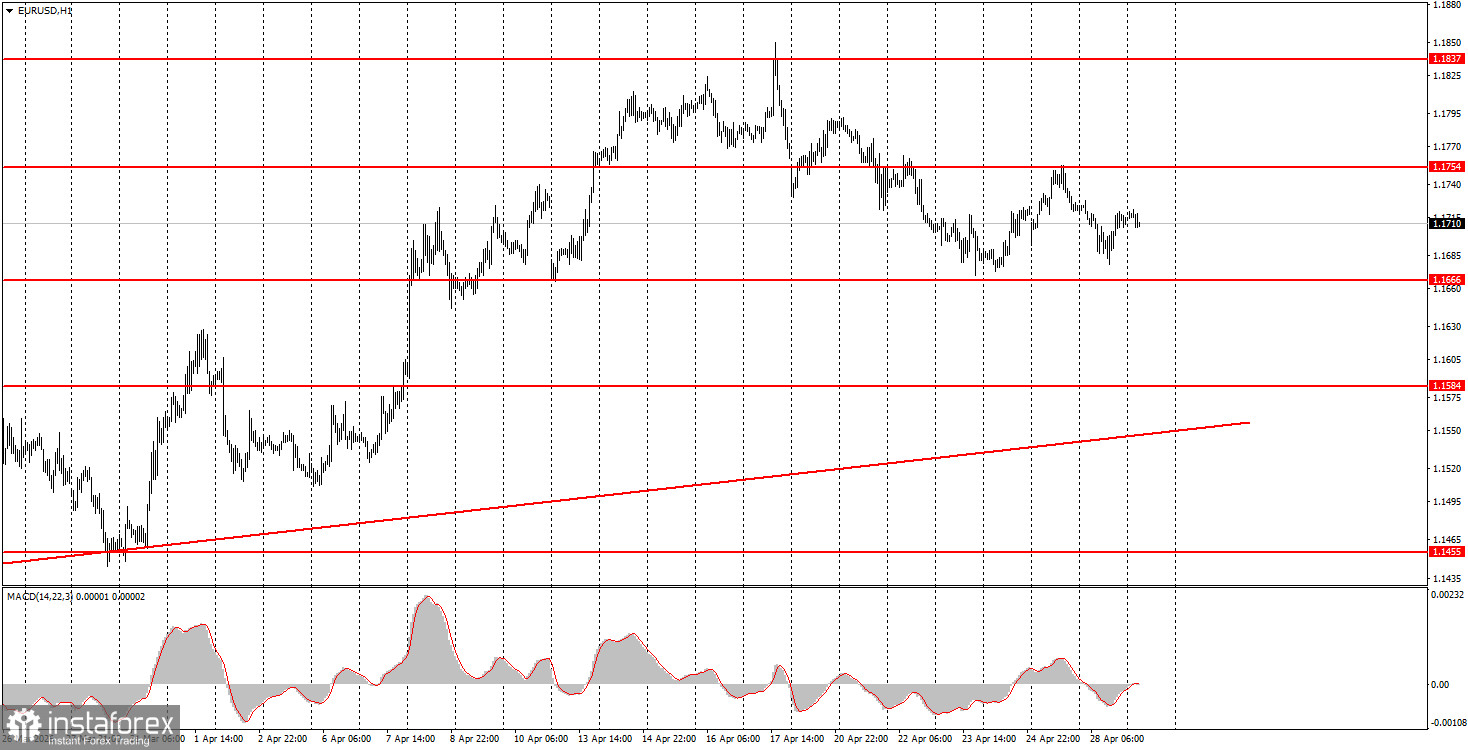
There are a few macroeconomic reports scheduled for Wednesday, but important economic information will finally begin to come to the market. Today, we advise paying attention to durable goods orders in the U.S. and to inflation in Germany. The market may well ignore both reports, as they do not hold "super-significant" status, and for the past two months, traders have paid little attention to even important reports.
Among the fundamental events, the FOMC meeting stands out, as it will be the last under Jerome Powell's tenure as chairman. No significant decisions are expected, as the market is confident that the key rate will remain unchanged. At the press conference, Powell will likely maintain a wait-and-see stance, and his rhetoric is unlikely to change significantly from previous speeches. Thus, even at the FOMC meeting, the market's reaction may be quite weak and will not significantly impact the technical picture for either currency pair.
The geopolitical backdrop continues to astonish with its level of uncertainty, preventing central banks from rushing into important monetary policy decisions. The war in the Middle East may resume if a deal between Iran and the U.S. is not signed. A deal cannot be signed if Iran does not even agree to a second round of negotiations. Meanwhile, the ceasefire continues, and the Strait of Hormuz remains closed.
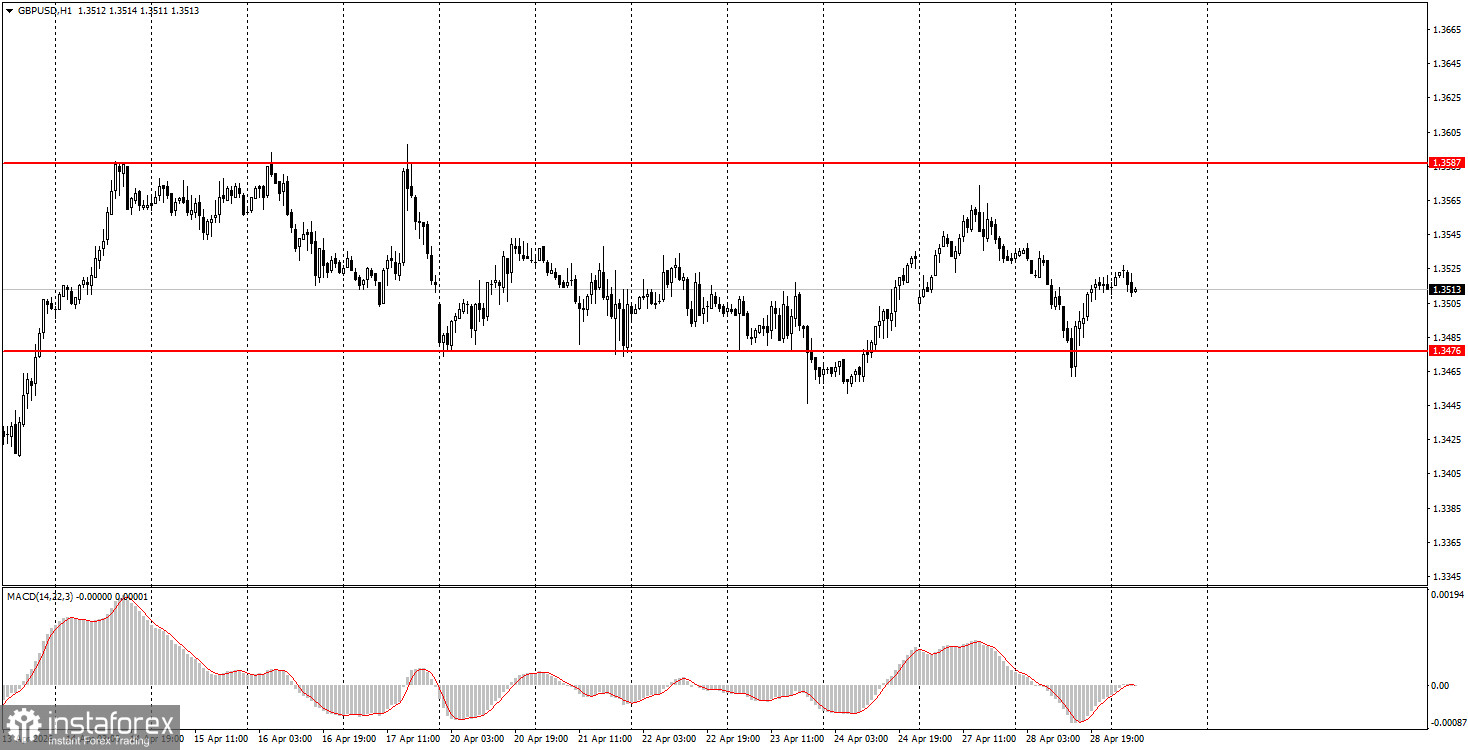
On the third trading day of the week, both currency pairs may exhibit high volatility in the evening, but during the day, technical factors will again prevail. The euro can be traded today in the ranges of 1.1655-1.1666 and 1.1745-1.1754, while the British pound can be traded in the range of 1.3476-1.3489. The correction for both currency pairs may continue, but the market may pay attention to today's FOMC meeting, which could provoke further movements.
Price levels of support and resistance are levels that serve as targets when opening buys or sells. Take Profit levels can be placed around them.
Red lines represent channels or trend lines that show the current trend and indicate the direction in which it is preferable to trade now.
The MACD indicator (14,22,3) – the histogram and the signal line – is a supporting indicator that can also be used as a source of signals.
Important speeches and reports (always included in the news calendar) can significantly affect the movement of the currency pair. Therefore, during their release, trading should be done with utmost caution, or traders should exit the market to avoid sharp price reversals against the previous movement.
Beginning traders in the forex market should remember that not every trade can be profitable. Developing a clear strategy and effective money management are the keys to long-term trading success.


