
See also


 29.09.2026 01:35 PM
Analysis of Trades and Trading Advice for the British Pound
The test of the 1.3233 price level occurred when the MACD indicator had just started moving down from the zero line, confirming the validity of the entry point for a short position on the pound. As a result, the pair declined by only 12 points, and that was the end of the move.
The morning batch of UK lending and money-supply data was internally mixed, but the pound essentially ignored the entire set of figures, showing no pronounced reaction in either direction. The data did provide grounds for different interpretations. Mortgage approvals fell to 54.9 thousand in August from the expected 58.0 thousand, while net lending to individuals increased to 6.9%. This partially offsets the weakness in the mortgage segment and prevents the overall picture from being interpreted as unambiguously negative. In my view, this combination will keep discussions about a possible Bank of England rate hike on the agenda, and despite today's lack of reaction to the statistics, the pound receives indirect support from these data due to the hawkish backdrop surrounding the British central bank.
The second half of the day for GBP/USD will be dominated by U.S. economic data. The housing price index and the U.S. consumer confidence indicator are due to be released, with the latter being of particular interest to the market, as consumer sentiment is currently one of the key indicators used to assess the resilience of the U.S. economy. If the figures exceed forecasts, the dollar will receive fresh momentum, and pressure on the pound will naturally intensify. An additional factor will be a series of speeches by FOMC members. Michelle Bowman, Michael Barr, and Christopher Waller are scheduled to speak today, and the combined effect of the three Fed officials' remarks could set the tone for the entire U.S. session. I believe that if the economic data are strong and the Fed maintains a hawkish tone, the pound will come under double pressure, while any attempts to rebound will encounter selling.
As for the intraday strategy, I will focus primarily on the implementation of Scenarios No. 1 and No. 2.
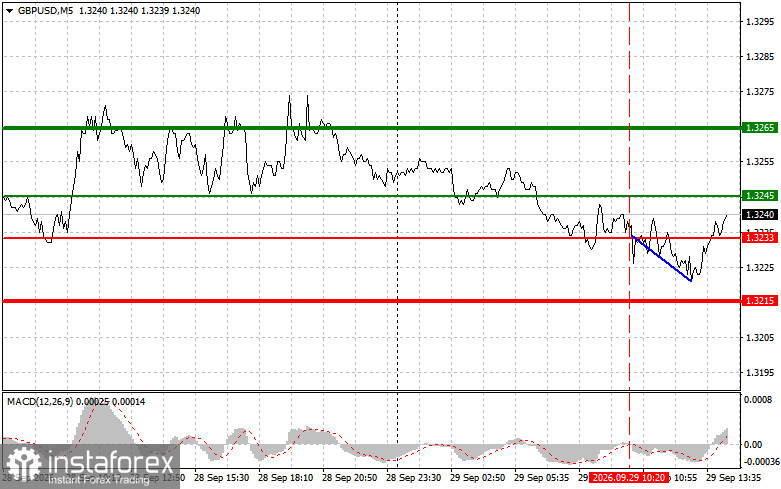
Buy Signal
Scenario No. 1: Today, I plan to buy the pound when the entry point is reached around 1.3245 (the green line on the chart), targeting a rise toward 1.3265 (the thicker green line on the chart). Around 1.3265, I will exit the long position and open a short position in the opposite direction, targeting a move of 30–35 points from the level. A rise in the pound today can be expected only if policymakers make very dovish comments. Important! Before buying, make sure that the MACD indicator is above the zero line and is just beginning to rise from it.
Scenario No. 2: Today, I also plan to buy the pound if the price tests 1.3231 twice consecutively while the MACD indicator is in the oversold zone. This would limit the pair's downward potential and lead to a reversal higher. A rise toward the opposite levels of 1.3245 and 1.3265 can be expected.
Sell Signal
Scenario No. 1: Today, I plan to sell the pound after the 1.3231 level is broken (the red line on the chart), which should lead to a rapid decline in the pair. The key target for sellers will be 1.3215, where I will exit the short position and immediately open a long position in the opposite direction, targeting a move of 20–25 points from the level. Strong pressure on the pound could return at any time and is unlikely to return. Important! Before selling, make sure that the MACD indicator is below the zero line and is just beginning to decline from it.
Scenario No. 2: Today, I also plan to sell the pound if the price tests 1.3245 twice consecutively while the MACD indicator is in the overbought zone. This would limit the pair's upward potential and lead to a reversal lower. A decline toward the opposite levels of 1.3231 and 1.3215 can be expected.
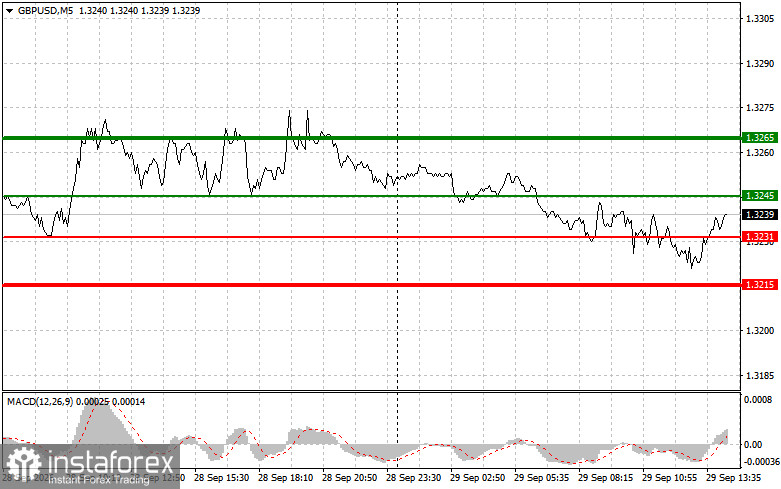
What the Chart Shows:
Important. Beginner Forex traders need to be very cautious when making decisions about entering the market. Before the release of important fundamental reports, it is generally preferable to stay out of the market to avoid exposure to sharp exchange-rate fluctuations. If you decide to trade during news releases, always place stop orders to minimize losses. Without stop orders, you can lose your entire deposit very quickly, especially if you do not use proper money management and trade large volumes.
And remember that successful trading requires a clear trading plan, such as the one presented above. Making spontaneous trading decisions based on the current market situation is, from the outset, an unsuccessful strategy for an intraday trader.


