
See also


 09.09.2026 12:47 AM
The New Zealand dollar fell after what appeared to be a hawkish Reserve Bank of New Zealand decision to raise the rate by 25 bp last week. The reason is banal — the market priced a much more aggressive path of hikes stretching into 2027 than the RBNZ's published forecast ultimately showed.
Now the central bank expects the peak rate to reach only 3.28% by 2029. The cross AUD/NZD rose 1.07%, hitting highs not seen since 2013. Leading banks' forecasts diverge: ANZ remains the most dovish, expecting the rate to stop at 3% and stay there through the end of 2027. ASB sees a peak at 3.25%. BNZ, by contrast, forecasts a tougher scenario — 3.75% by May 2027. Westpac does not rule out even 4% by September 2027.
Data published in the week since September 3 only confirmed the complexity of this dilemma. New Zealand's economy appears split into two almost independent segments. The external sector is doing well — export industries, especially dairy and meat, show excellent results thanks to high commodity prices and steady demand from trading partners.
However, the domestic economy continues to struggle. High fuel prices, a weak labor market with unemployment at 5.6% (and forecasts that it will remain above 5% at least until 2028), falling real house prices, and forced household saving — this is the reality for much of the country.
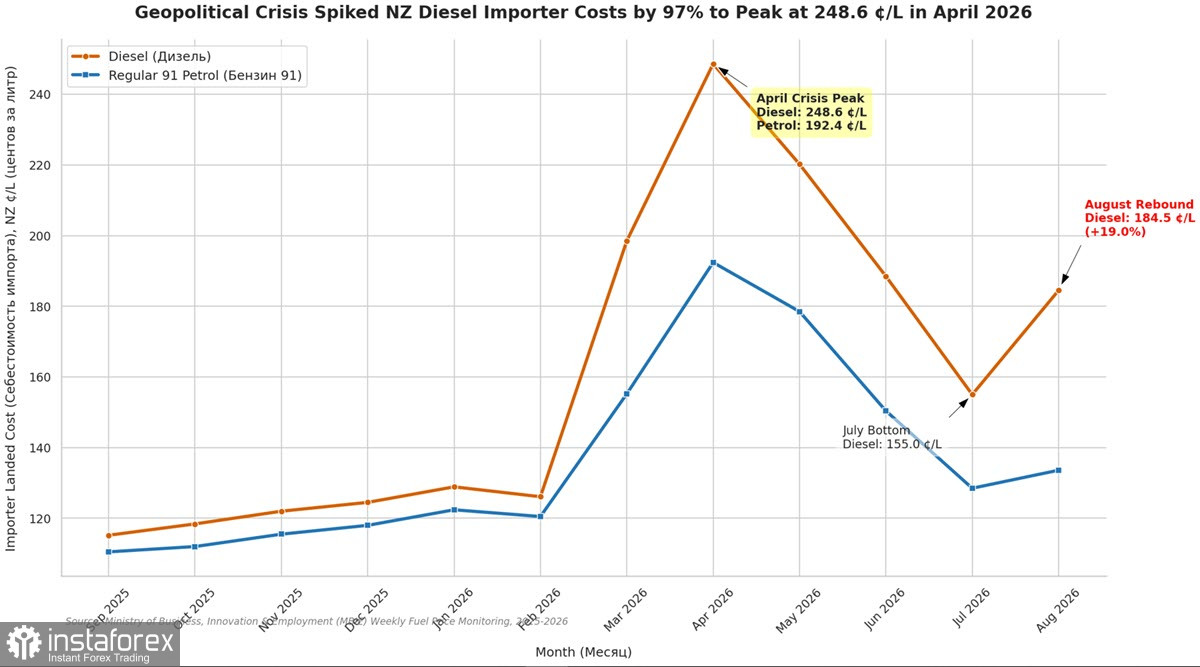
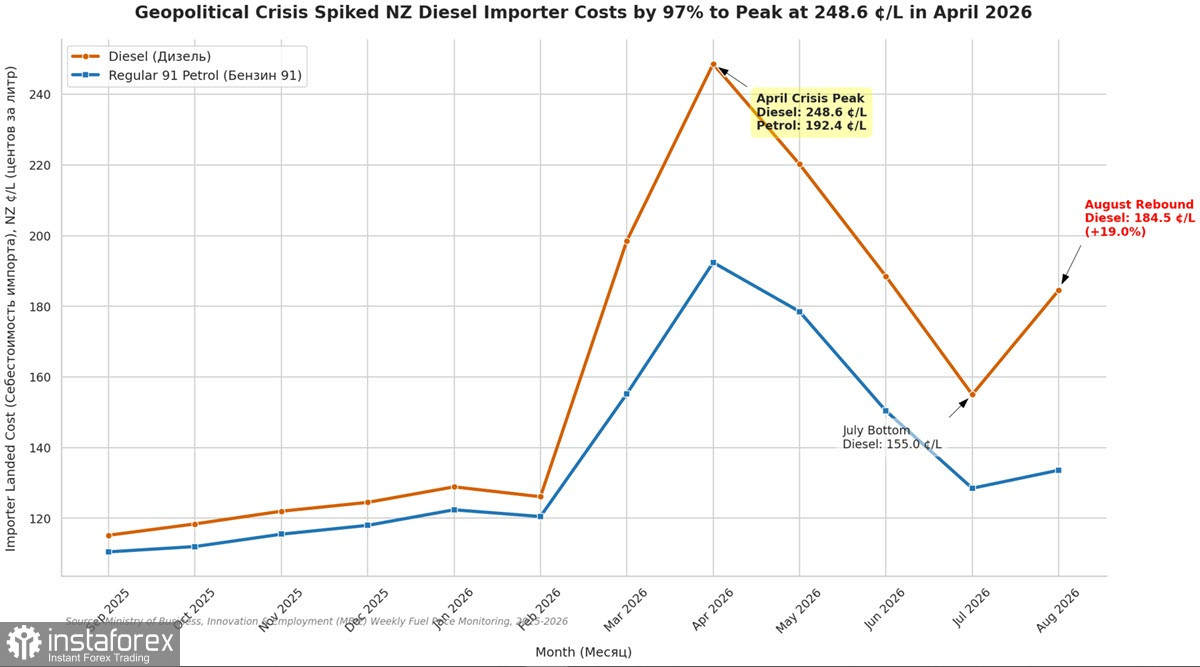
The energy crisis has already reached New Zealand. Importers' fuel costs rose 127%, and the trade deficit in July reached nearly $2 billion. The country finds itself in an oil trap.
Geopolitical dependence is the main risk to New Zealand's entire economic model. The RBNZ is categorically unwilling to fuel inflation and is waiting for the geopolitical backdrop to change. Until shipping through the strait is restored, the RBNZ must balance fighting the external shock against the risk of choking already weak domestic demand. That explains the central bank's cautious stance.
There is a silver lining — debates about energy independence, supplier diversification, building domestic storage and accelerating the shift to electric transport are now framed as national security issues rather than merely climate policy. Clearly these are long-term measures, so for now the kiwi remains hostage to geopolitical developments.
Net short NZD positions shrank during the reporting week to a symbolic -0.485 billion, and the implied price is rising steadily.
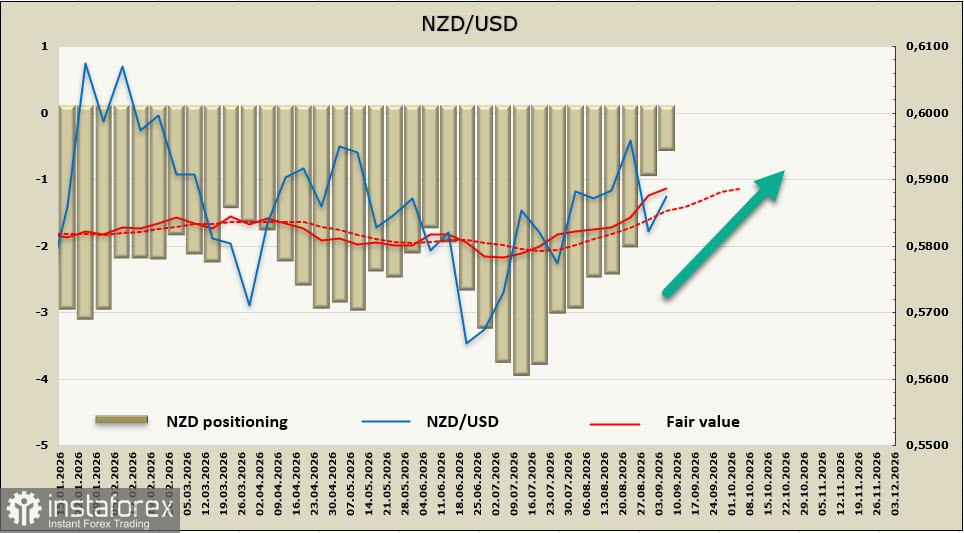
We expected a clearer resumption of NZD/USD upside last week; this has not yet materialized, and the base formation has stretched out. The RBNZ and the Federal Reserve use opposing language in their comments, which is not supportive of the kiwi, yet there is insufficient momentum for a sharp further drop. Most likely, the main move will start after the US inflation report. We stick to our previous view — the probability of a retest of 0.5797 is low, and we await renewed upside toward 0.5985–0.5990.


