
See also


 20.07.2026 06:37 AM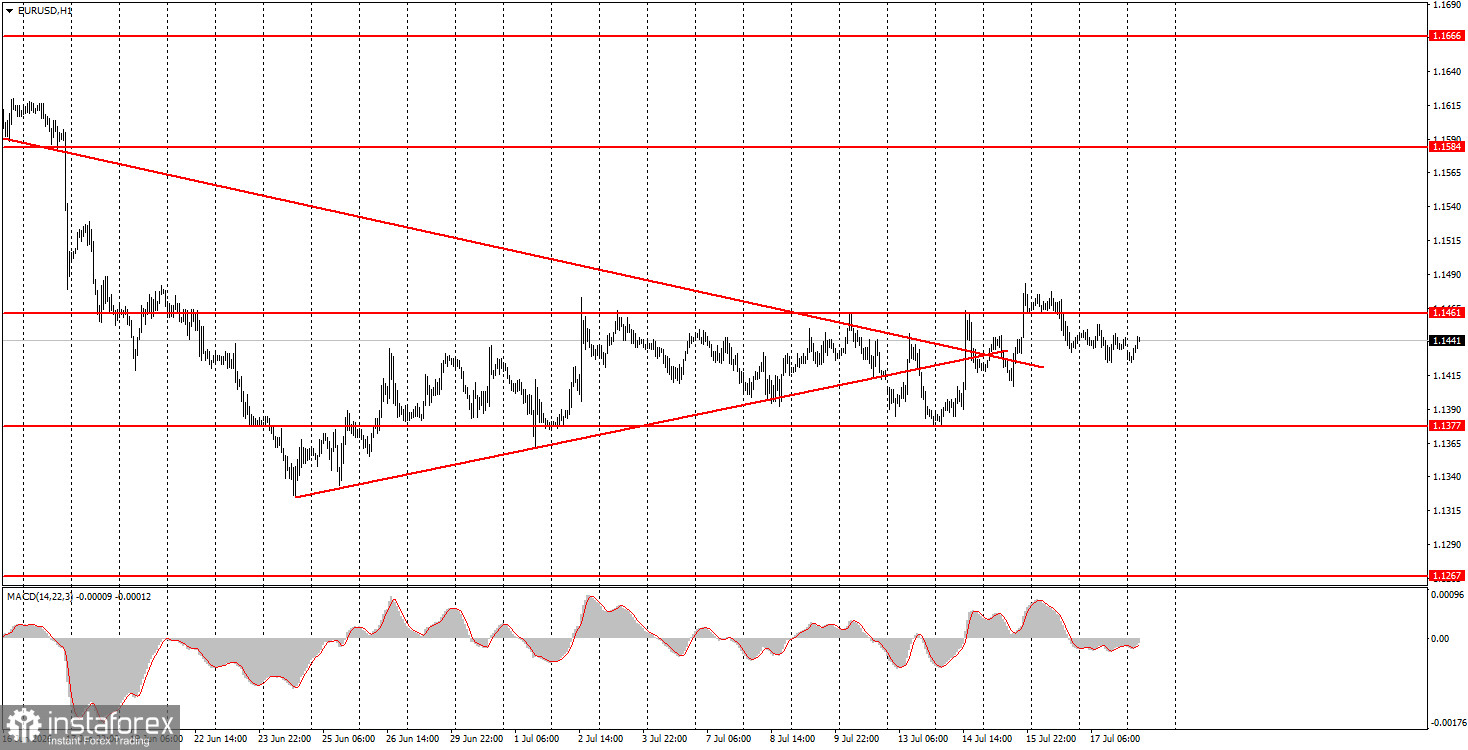
No macroeconomic publications are scheduled for Monday. Aside from the producer price index in Germany, which has no chance of being noted by traders. Thus, volatility today may once again be low for both currency pairs, and traders will have nothing to react to throughout the day.
There is also nothing to highlight in terms of fundamental events on Monday. Recent statements from members of the FOMC indicated a softening of the American central bank's "hawkish" plans, at least for the next two meetings. Inflation in the U.S. has slowed from 4.2% to 3.5%, so there is hope for further decline without intervention from the Federal Reserve. The U.S. central bank is unlikely to rush into raising the key interest rate in the coming months. In this case, the dollar loses another supporting factor. However, inflation and the Fed's decisions will depend on oil prices and the conflict in the Middle East.
The geopolitical backdrop remains steadily "conditionally positive." Iran and the U.S. have signed an agreement; however, too many important questions remain unresolved. In particular, the "nuclear issue," the war between Lebanon and Israel, and the status of the Strait of Hormuz. Theoretically, the market may fear a resumption of full-scale war; however, this is clearly not enough for the dollar to begin rising actively again. Moreover, Tehran and Washington have not completely exited the negotiation process. Although recent events in the Middle East demonstrate the fragility of any ceasefires between the United States and Iran. The Strait of Hormuz is currently once again under blockade.
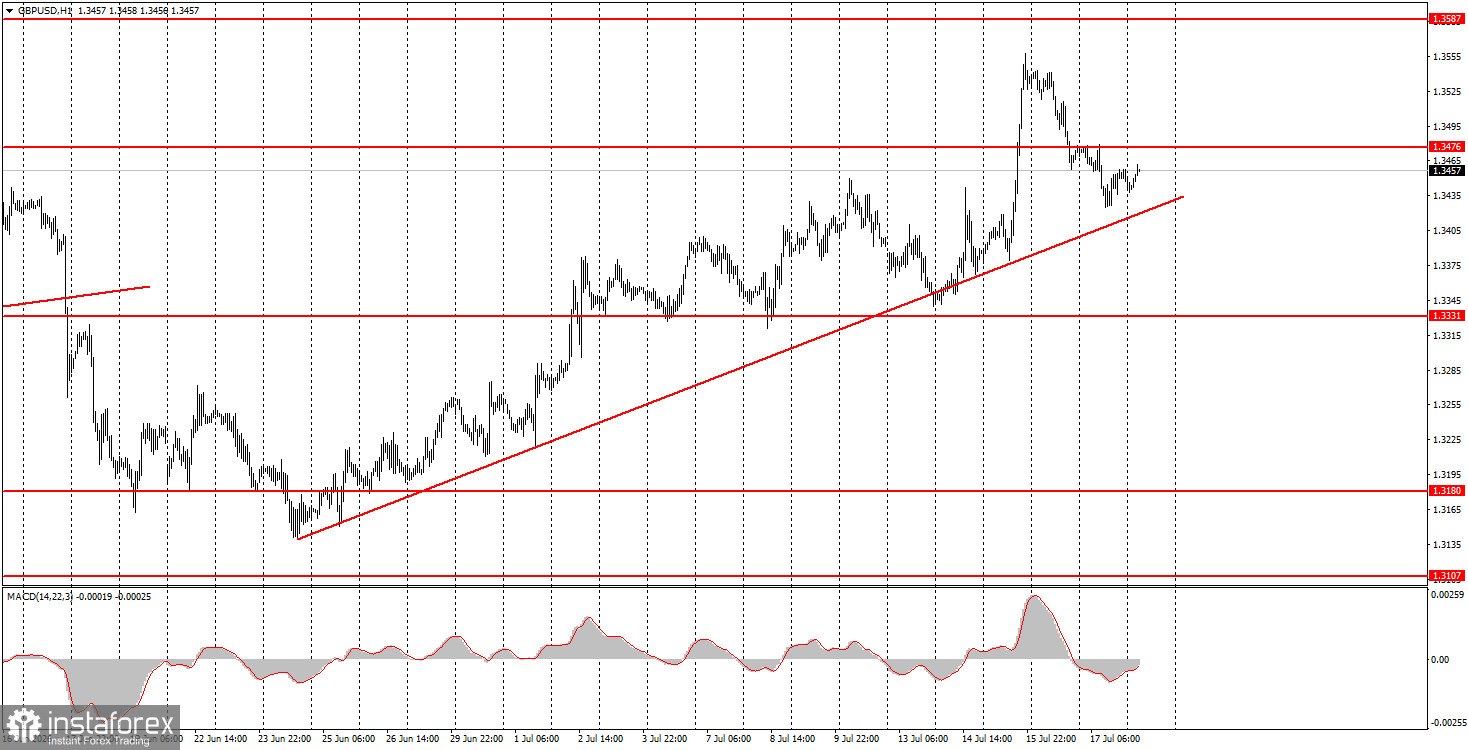
During the first trading day of the week, both currency pairs may move very sluggishly, as no important events are expected today. The euro can be traded from the area of 1.1461-1.1466, while the British pound can be traded from the area of 1.3456-1.3476. The euro cannot show significant growth and is leaning towards a new decline, while the British pound has been in an upward trend for three weeks but may continue to correct today.
Price levels (areas) of support and resistance are targets when opening long or short positions or sources of signals.
Red lines indicate channels or trend lines that display the current trend and indicate the preferred direction for trading.
The MACD indicator (14,22,3) – histogram and signal line – is a supplementary indicator that can also be used as a source of signals.
Important speeches and reports (contained in the news calendar) can significantly impact the movement of the currency pair. Therefore, during their release, trading should be conducted with maximum caution, or one should exit the market to avoid sharp reversals against preceding movements.
Beginners trading in the forex market should remember that not every trade can be profitable. Developing a clear strategy and practicing money management are key to long-term success in trading.


