
See also


 30.01.2026 08:12 PM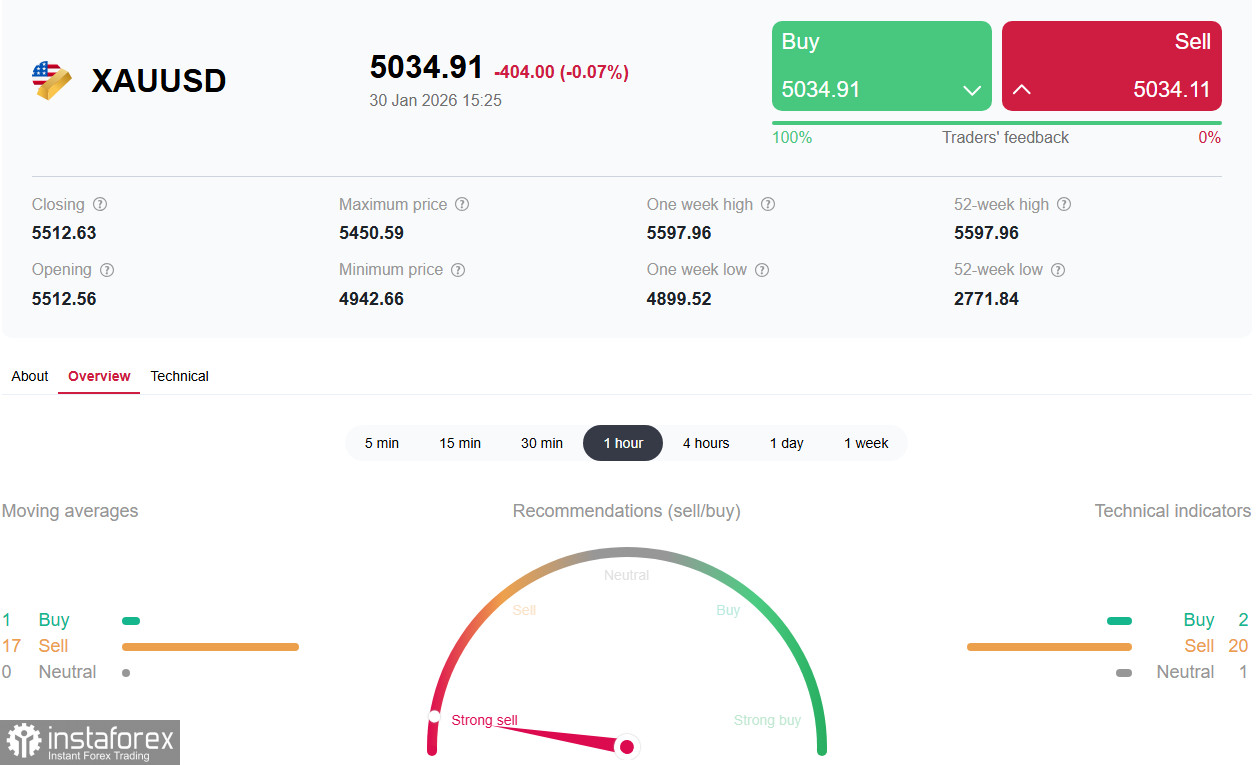
XAU/USD: the current correction may present an opportunity for long?term entries, but only after clear stabilization signals and the emergence of renewed upward momentum
High volatility remains a defining feature of the markets. A vivid example is the price action in gold on Thursday and Friday.
The gold market experienced one of the most dramatic episodes in its recent history over a few January trading days. In just a few hours on the last trading day of the month, the price of the precious metal plunged by more than 8%, collapsing from a record high near $5,600.00 /oz to below 5,000.00. This staggering sell?off — which, by various estimates, wiped about $3.5 trillion of market capitalization off the table — became a severe stress test for the bullish trend that had delivered gold its strongest monthly gain since 1980 (almost +18%).
Why did gold crash? The sharp sell?off, during which XAU/USD lost roughly 13% over two days, was the result of a perfect storm formed by three key factors:
Technical picture
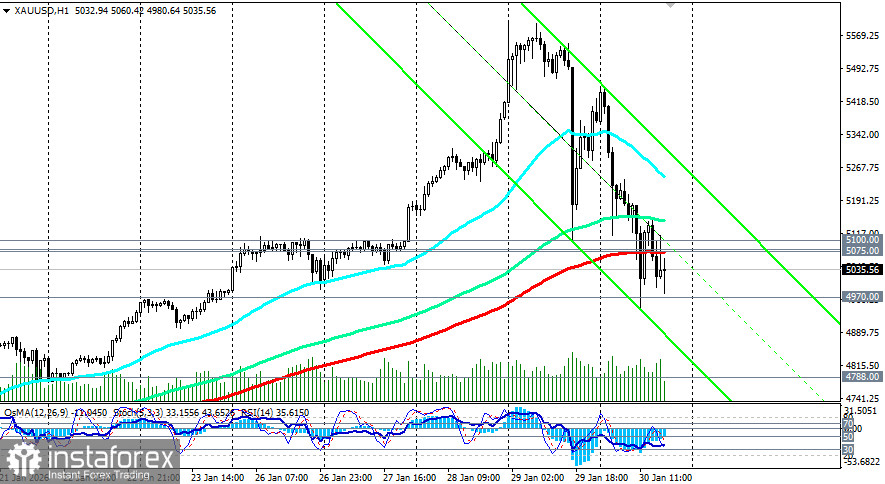
After the sharp drop, the short?term technical outlook shifted bearish.
Key support: The psychologically important 5000.00 level is now the first line of defense.
Resistance: The area around the 50?period EMA on the 4?hour chart (5,075.00–5,100.00) now serves as the first major resistance zone. A return and hold above this zone is required to stabilize the situation.
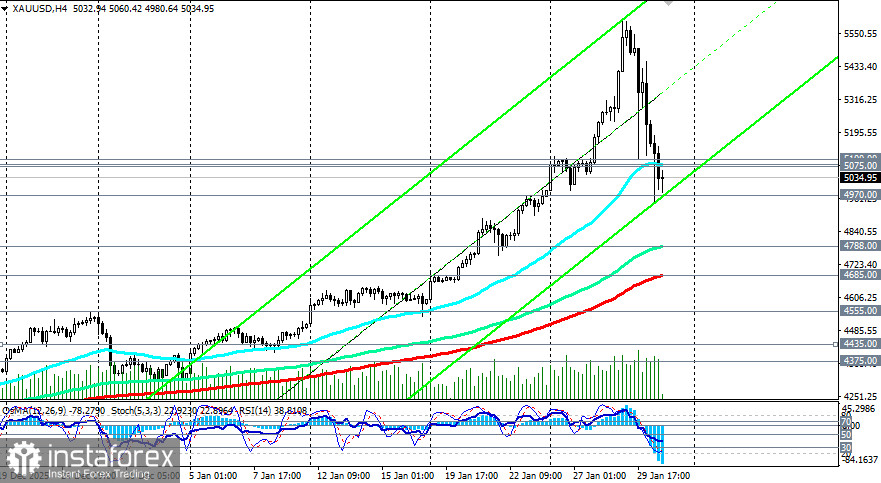
Indicators: RSI on the 1?hour and 4?hour charts has fallen to 35–40, indicating strong short?term oversold conditions and a loss of upside momentum on the higher daily timeframe. However, the broader long?term trend remains constructive: shorter moving averages (21 and 50) are still above longer ones (144 and 200).
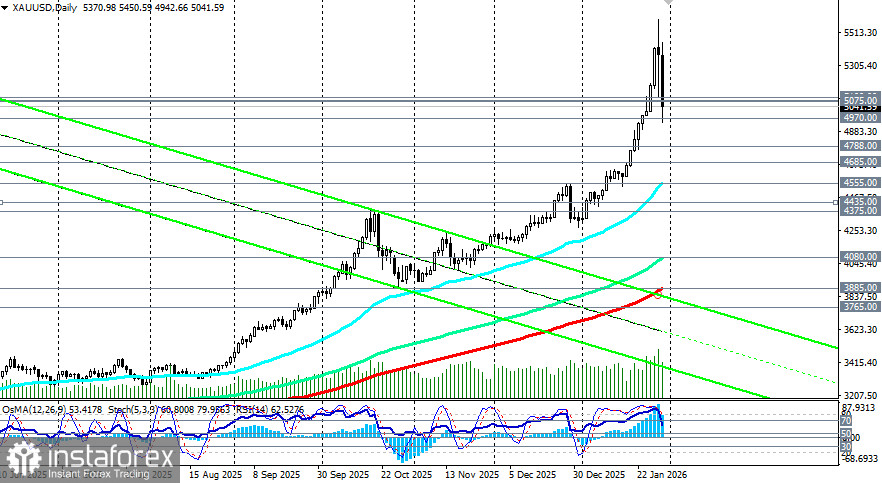
Outlook: what's next? Despite the shock correction, the fundamental drivers of the gold bull market remain intact.
Supporting factors
Constraining factors
Possible scenarios
Conclusion
The gold crash was a powerful — and perhaps healthy — corrective movement in an overheated market. It does not negate the long?term bullish factors such as geopolitical tension and economic risk, but it makes clear that the path higher will not be linear and will depend on Fed policy and the dollar's strength.
Over the coming weeks, XAU/USD will likely remain highly volatile, oscillating between support at 5000.00 and resistance around 5200.00–5300.00. Investors should monitor developments around the Fed chair nomination, upcoming US macroeconomic data (especially inflation readings), and any new geopolitical events. The current correction may offer an opportunity to establish long?term positions — but only after clear signs of stabilization and the formation of a new upward dynamic.


